 English


Keywords: peptide; peptide hydrolysis; peptide bonds; peptide modifications, peptide synthesis; peptide bond; peptide hormones; peptide analogs; salting out; amidation; acetylation
Peptides
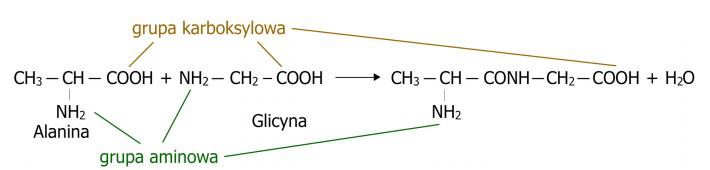
Peptides are chemical compounds built similarly to proteins, from amino acids. They form by joining two or more amino acids through a peptide bond in a condensation process, where besides the peptide, a water molecule is also produced. (Fig.1) They are the subject of wide interest, performing important biological functions. Many hormones and neurotransmitters are peptides. In the case of endogenous peptides, they act against microbes, serving as the body's defense system. Naturally occurring peptides and their synthetic analogs are considered attractive compounds with therapeutic significance due to their high activity, low toxicity, and lack of interactions with medicines. In medical practice, only a few peptides are used because of their biological instability and rapid breakdown, but peptide synthesis allows obtaining stable forms. This is similar, for example, in the synthesis of peptides from natural sources. Peptides occur in an unbranched form, having only two specific ends. One is called the amino end, where the amino acid has a free α-amino group. The other is called the carboxyl end or C-end, where the amino acid has a free α-carboxyl group.
Peptide nomenclature
Peptide naming begins with the name of the N-terminal amino acid residue, then lists the names of the subsequent amino acid residues, ending with the name of the C-terminal amino acid. The sequence of amino acids is written using three-letter or one-letter symbols.
Peptide bond
The carbon atom, as a result of the reaction of the α-carboxyl group, bonds with the nitrogen of the α-amino group by a single bond, the peptide bond. It is assumed that this bond exists in two structures that remain in a certain mutual balance. The C-N bond shifts to C=N and vice versa. Rotation around the C=N axis is not possible, making the peptide bond rigid enough to have characteristics of a double bond. In the case of the peptide bond involving the imino group of proline or hydroxyproline with the carboxyl group of another amino acid, a different, distinct structure forms. The nitrogen in this case is part of the pyrrolidine ring structure, there is no hydrogen substituent, so rotation around the bonds formed in the presence of nitrogen is not possible. Amino acids involved in forming the peptide bond lose parts of their molecules: -OH from the carboxyl group and -H from the amino group. Therefore, amino acids in peptides and proteins are called amino acid residues. The formed peptide bonds are stable and their breakdown can occur only under the action of strong bases and acids at high temperature.
Breaking the peptide bond
Breaking the peptide bond occurs as a result of peptide hydrolysis, which involves breaking the formed peptide bonds and restoring individual amino acids. Water participates in this reaction, whose molecules split into hydroxyl groups (-OH) and hydrogen atoms (H), which then join the released bonds of the substance.
Peptide classification
Peptides are classified based on the number of amino acids they contain. In general peptide classification, we distinguish:
-
Dipeptides – products formed from the reaction of two amino acids, retaining a free amino group of one amino acid and a free carboxyl group of the other;
-
Oligopeptides – peptides composed of several to a dozen or so amino acids;
-
Polypeptides – longer peptides containing several dozen amino acid residues;
-
Proteins – accepted when the molecule consists of more than one hundred amino acid residues.
Spectrum of peptide activity
Peptides exhibit a wide range of biological activity and are used in the treatment of bacterial infections, viral diseases, circulatory system diseases, skeletal system diseases, nervous system diseases, diabetes, and osteoporosis.
Advantages of peptides
- High activity and selectivity
- Wide range of molecular targets
- Potentially lower toxicity compared to low-molecular compounds
- Low accumulation in tissues
- High chemical and biological diversity
- Discoverable at the gene level
- Easy synthesis of analogs
Peptide synthesis
Depending on the peptide we want to obtain, an appropriate synthesis method is needed. In brief, we will present peptide synthesis according to its size. To obtain a dipeptide, a reagent is used to activate the carboxyl group of the acylating amino acid or to convert the acylating amino acid into an anhydride. The process is more laborious and difficult for larger peptides, which are obtained from dipeptides by removing the protective group from the N-terminal amino acid and acylating it with another N-protected amino acid. This process is particularly time-consuming because these steps are repeated until the peptide with the planned sequence is obtained. For obtaining large peptides, the Merrifield method is the most effective and easiest. This method is carried out in the solid phase. The C-terminal amino acid is attached to a polymer, then subsequent amino acids are added until the desired chain length is reached.
Biologically active peptides
Peptide hormones and protein hormones are commonly found in our environment. Previously, most were known as unstable forms. Thanks to synthesis, peptide therapy can be increasingly tailored to be stable and effective according to the body's needs. Therefore, it is worth skillfully and safely working with hormone stimulation. Considering some biologically active peptides, an example is glutathione, a tripeptide with a specific structure built from glutamate, cysteine, and glycine. Glutamate is the N-terminal amino acid. The bond between glutamate and cysteine is unusual for peptides and proteins because it involves the γ-carboxyl group of glutamate instead of the α-carboxyl group. Glutathione thus exists in reduced and oxidized forms, being γ-glutamylcysteinylglycine. In the reduced form, it has a free sulfhydryl group, while in the oxidized form, a pair of hydrogen atoms detaches from the –SH groups. The sulfur atoms remain without hydrogen, resulting in the formation of a disulfide bridge. The modification ability of glutathione in oxidized or reduced states is important in redox processes.
Another example is oxytocin and vasopressin, nanopeptides produced by hypothalamic neurons and released by the posterior pituitary, differing by only two amino acids. Cysteine occurs in two positions, leading to the formation of a disulfide bridge. Oxytocin acts as a hormone stimulating uterine contractions. Vasopressin stimulates water reabsorption in kidney tubules. Vasopressin also plays an important role in regulating the secretion of adrenocorticotropic hormone (ACTH) during stress.
Peptide hormones
Adrenocorticotropic hormone (ACTH)
Adrenocorticotropic hormone, a 39-amino acid peptide, is formed by degradation of a much larger precursor molecule called proopiomelanocortin (POMC). Proopiomelanocortin is also a source of other active peptides. Two peptides are contained within the ACTH structure: α-melanocyte-stimulating hormone (α-MSH), identical in structure to the first 13 amino acids of ACTH, and the intermediate pituitary peptide similar to corticotropin – fragment 18-39 of ACTH. The primary function of ACTH is to stimulate the adrenal cortex to secrete steroid hormones. ACTH regulates activity at the level of the zona fasciculata and reticularis. The biological activity of ACTH is attributed to the first 18 amino acids. ACTH regulation occurs through corticoliberin (CRH), a hormone from the hypothalamus that releases corticotropin, and cortisol via negative feedback. This means cortisol deficiency stimulates CRH and ACTH, while excess inhibits their secretion. By releasing cortisol, many vital functions are regulated, including mobilizing the body for stress, raising blood pressure, and anti-inflammatory effects. ACTH is secreted in a pulsatile circadian rhythm, with the highest concentration in the morning when it is most needed, then decreasing throughout the day. Increased ACTH secretion is observed in diseases such as adrenal cortex insufficiency, Cushing's disease, and Nelson's syndrome.
Insulin and C-peptide
Insulin and C-peptide are continuously secreted by the pancreas in the human body. During insulin production, in its biosynthesis process, C-peptide is produced. Pancreatic cells first produce preproinsulin, which undergoes further modification by removing amino acids, leading to proinsulin composed of two chains, A and B, connected by C-peptide. Then, C-peptide is detached from proinsulin, resulting in the final form. When glucose appears in the body, the pancreas receives a signal to release granules containing stored insulin and C-peptide. C-peptide remains in the liver much longer than insulin because it is not degraded there. Its breakdown mainly occurs in the kidneys. Elevated or too low levels of insulin and C-peptide lead to the development of type I or II diabetes and Cushing's disease. Fluctuations in C-peptide levels may also indicate chronic kidney failure or the presence of metastases or local tumor recurrence, making it important to maintain their proper concentration levels.
Motilin
Motilin is a hormone related to the smooth muscles of the stomach and intestines, controlled by vagus nerve fibers. It is synthesized in endocrine cells. As a peptide hormone built from 22 amino acids arranged in a specific sequence, it is produced by cells of the small intestine. Produced by endocrine cells of the digestive system M (Mo), it participates in regulating gastrointestinal motility. Motilin is an important hormone involved in the third phase of the migrating motor complex (MMC), during which the stomach and small intestine empty the stomach of unnecessary food residues and sloughed epithelial cells by stimulating peristaltic movements. The hormone also influences gallbladder emptying during the interdigestive period at the highest motilin concentration.
Glucagon
Glucagon is one of the hormones involved in regulating glucose concentration; this peptide is secreted by endocrine cells of the pancreas. It is a polypeptide composed of 29 amino acids, formed from a 180-amino acid precursor. Changes in glucose concentration trigger glucagon secretion. The hormone is produced in the pancreatic islets, where proglucagon gives rise to glucagon and glicentin-related pancreatic polypeptide (GRPP). The main task of glucagon is to maintain proper glucose levels in the blood serum during drops between meals or physical exertion. Its reserves are released from the liver in such situations to provide the body with adequate protection. Additionally, it may participate in regulating food intake, causing satiety to appear earlier. Glucagon may potentially inhibit ghrelin release and also suppress intestinal peristalsis.
Peptide analogs
Peptide analogs are chemical compounds in which one atom is replaced by another compared to the original compound. The general peptide structure remains unchanged. Peptide analogs include helix-structured analogs and β-turn and β-sheet analogs. In the first, helices are key structural elements of bioactive peptides. Stabilizing short oligomer fragments in a helical conformation increases activity. In β-turn and β-sheet analogs, D-amino acid residues or β, γ, δ-amino acid residues are inserted. Peptide analogs allow obtaining new peptide compounds that are more stable, applicable in a wider range of symptoms, and enable innovative solutions to problems related to the action of previous pre-analog forms.
Peptide salting out
The salting out process involves changing protein charges. Protein charges are neutralized by anions and cations of salts. Protein molecules do not attract each other and do not form aggregates; the protein precipitates due to the loss of the water shell. The salting out process is reversible. Reversal involves removing the salt by dialysis or lowering its concentration by adding water. Based on our previous articles, it can be confidently stated that salting out, which led to the formation of a stable form of the peptide BPC-157, is an innovative method for ensuring peptide stability and thus extending the biological action of peptides.
Peptide acetylation
Acetylation involves attaching acetyl groups to substrates containing NH2, OH, or SH groups with the help of the enzyme N-acetyltransferase. The source of the acetyl group is acetyl-CoA. The main function of N-acetyltransferases is to facilitate the connection of the acetyl group with the amino group of aromatic amines and hydrazines (N-acetylation reaction), i.e., detoxification of potentially toxic exogenous compounds.
Peptide amidation
When peptide bonds break and the polypeptide chain fragments, carbonyl groups form. Oxidation of the protein molecule by hydroxyl radicals begins with the removal of a hydrogen atom from the α-carbon of the amino acid. The resulting alkyl radical reacts with oxygen, forming an alkylperoxyl radical that converts into alkyl hydroperoxide. The resulting alkoxyl radical can transform into a hydroxylated α-amino acid residue or cause fragmentation of the polypeptide chain. The presence of the alkoxyl radical promotes polypeptide chain fragmentation. Peptide bond cleavage can occur via α-amidation or diamidation. The N-terminal peptide formed during α-amidation has an amide group at the C-end, while the other peptide contains an N-α-ketoacyl derivative at the N-end. Fragmentation via diamidation results in an N-terminal peptide containing a diamide structure and a peptide from the C-end of the protein molecule containing an isocyanate structure at the N-end.
Bibliography 1. Murray R. K., Granner D. K., Mayes P. A., Rodwell V, Harper's Biochemistry. 1995; PZWL Medical Publishing House
2. Jakubke H. D., Jeschkeit H, Amino acids, peptides, proteins. 1982; State Scientific Publishing House
3. Kołodziejczak A, Amino acids and peptides. 2006

The effect of BPC-157 therapy on the immune system
Peptides with antimicrobial properties and their analogs created through modification.