 English


Abstract: Due to its broad spectrum of activity, the BPC-157 peptide is also applicable in the management of addiction-related consequences and in alleviating undesirable symptoms during withdrawal syndromes. BPC-157, administered both parenterally and orally, may therefore be regarded as a promising adjunct in the treatment of various types of addiction.
Keywords: addiction; non-steroidal anti-inflammatory drugs; BPC-157 therapy; overdose; paracetamol; alcohol dependence; drug dependence; withdrawal syndrome; local anaesthetics; opioid drugs; morphine; lidocaine; diclofenac; amphetamine; alcohol
List of abbreviations: BPC – Body Protection Compound; NSAIDs – Non-Steroidal Anti-Inflammatory Drugs
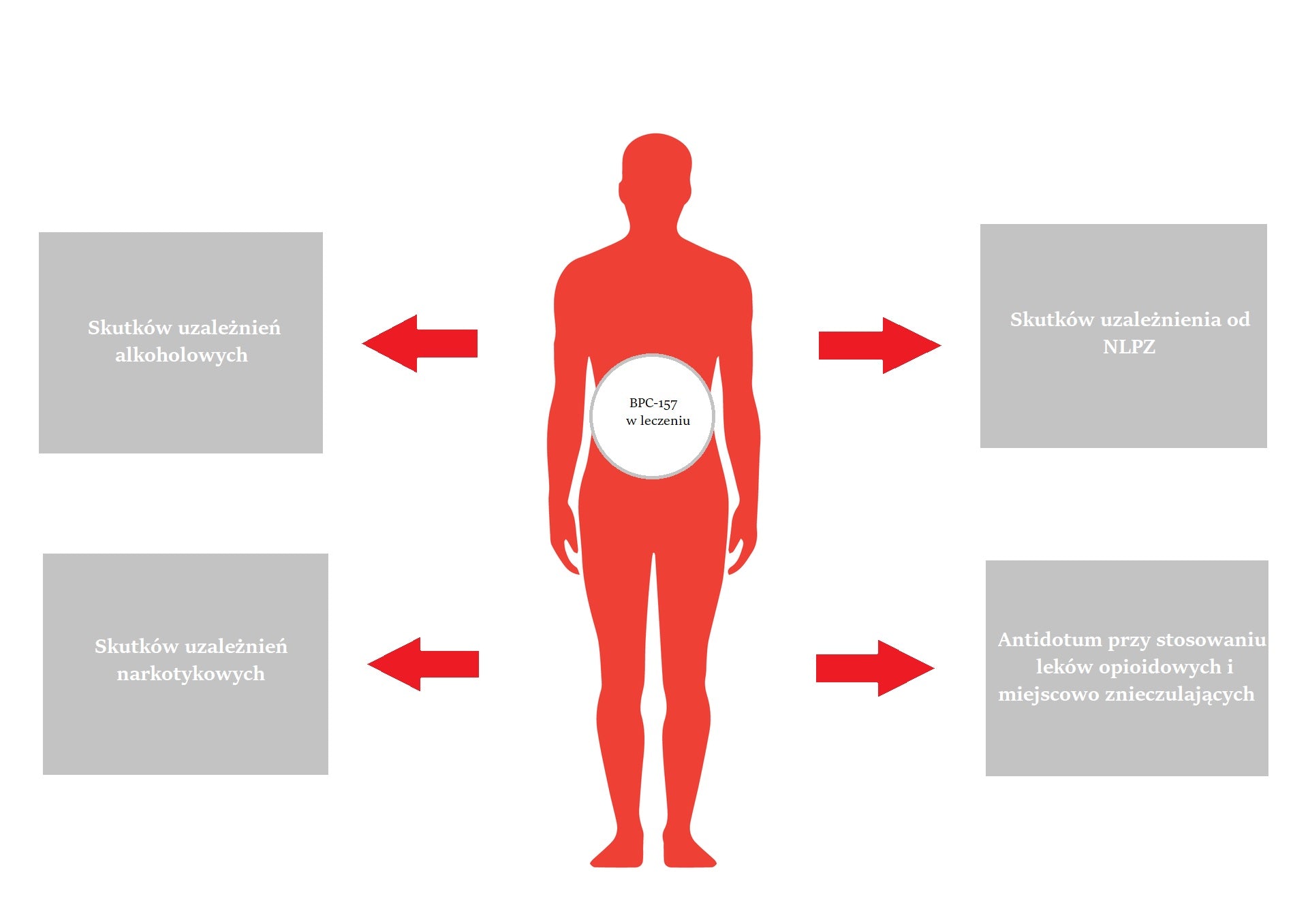
BPC-157 peptide therapy is a pioneering therapeutic approach that acts on and modulates the adverse pathological consequences induced by dependence on specific substances. BPC-157 therapy enables mitigation of undesirable effects in the context of excessive use of alcohol, narcotics, NSAIDs, opioid drugs and local anaesthetics. (Fig. 1)
Figure 1. Treatment with BPC-157 peptide therapy in relation to the adverse consequences of addiction.
Management of NSAID-related dependence and toxicity
Concept of NSAIDs
NSAIDs (non-steroidal anti-inflammatory drugs) are among the most frequently used agents in pain management. Their pharmacological profile includes analgesic, anti-inflammatory, antipyretic and antithrombotic effects. Most drugs in this group are available over the counter, which increases the risk of NSAID overuse and dependence.
It is common for patients to take several different NSAIDs simultaneously, without adequate knowledge of the consequences and without medical consultation, which limits safety monitoring. Self-medication may lead to dependence on NSAIDs and serious adverse effects involving the gastrointestinal tract, kidneys, liver or respiratory system in patients with asthma.
Educating patients on appropriate NSAID therapy and addressing side effects arising from improper, dependency-forming use is crucial for preserving health and facilitating recovery.
BPC-157 therapy in NSAID-related dependence
A representative example of the effectiveness of BPC-157 peptide therapy in the context of NSAID overuse is aspirin (acetylsalicylic acid). Aspirin’s mechanism of action is based on inhibition of cyclooxygenase activity, thereby preventing prostaglandin synthesis and reducing inflammation. This effect is desirable, and when aspirin is used at appropriate doses and intervals, it is considered safe. Other cyclooxygenase inhibitors include ibuprofen, diclofenac and paracetamol.
Unfortunately, due to their rapid onset of action and easy availability, these substances are often overused, which carries a broad range of adverse effects such as nausea, vomiting, gastric ulcers, headache, impaired consciousness, depressed mood, and even an increased risk of myocardial infarction or stroke.
BPC-157 therapy is an innovative, modern and safe approach that enables management of the consequences of dependence on NSAIDs. In the context of NSAID-induced adverse effects, the BPC-157 mechanism of action involves protein phosphorylation, inhibition of protein denaturation, stabilisation of lysosomal and cell membranes, inhibition of complement activation, inhibition of proteases and protein kinases, and modulation of fibrinolytic activity.
Hepatoprotective action of BPC-157 in NSAID overuse
The hepatotoxic effects of NSAIDs are also counteracted by BPC-157, particularly in the case of paracetamol, diclofenac and ibuprofen. The hepatotoxicity of paracetamol is mainly attributed to its conversion into the highly reactive metabolite N-acetyl-p-benzoquinone imine (NAPQI) by microsomal cytochrome P450 enzymes. BPC-157 peptide inhibits or reverses this process.
The hepatoprotective effect of BPC-157 is broad, covering acute, chronic and even advanced stages of liver disease. Both parenteral and oral administration of the peptide constitute a practical and convenient option in liver protection.
Additionally, in the context of diclofenac or ibuprofen overuse, BPC-157 supports restoration of liver function by almost completely normalising alanine aminotransferase (ALT) levels and substantially reducing aspartate aminotransferase (AST) levels. The action of BPC-157 also includes prevention of portal and hepato-gastric hypertension.
BPC-157 in paracetamol overdose
Studies on paracetamol overdose have demonstrated rapidly developing, progressive hepatic encephalopathy accompanied by seizures and damage in several brain regions. BPC-157 therapy is effective in treating paracetamol-induced toxicity.
The action of BPC-157 peptide reduces liver and brain injury, particularly when administered immediately after paracetamol exposure. When used in the context of paracetamol dependence, BPC-157 has been shown to abolish seizures by reducing neuronal activity and interstitial oedema without inducing an inflammatory response.
These findings indicate that BPC-157 can safely provide the expected therapeutic benefit even in highly advanced, harmful states resulting from paracetamol overdose.
Management of alcohol-related dependence
Alcohol dependence
Alcohol dependence is a widespread condition occurring across all social groups. Alcoholic beverages are easily accessible, which may lead to alcoholism of varying severity. Alcohol abuse and dependence constitute a chronic, progressive disease which, if left untreated, may ultimately be fatal.
Alcoholism is multifactorial and affects both the physical and mental health of the individual. While alcohol abuse may be halted, alcohol dependence as a disease cannot be fully cured; nevertheless, in both situations, the secondary consequences arising during periods of alcohol use can be mitigated.
Excessive alcohol consumption leads to disturbances in the circulatory, digestive, nervous and respiratory systems. Studies indicate that BPC-157 peptide helps to reduce pathological consequences associated with alcohol dependence treatment.
BPC-157 therapy in alcohol dependence
Studies have demonstrated beneficial effects of BPC-157 peptide on alcohol-induced gastric lesions occurring in the course of alcohol abuse or dependence. Chronic use of high-proof alcoholic beverages frequently results in gastric ulcers, and as shown previously, systematic use of BPC-157 promotes their healing and gastric cytoprotection, forming a protective barrier for the stomach.
In the cardiovascular system, which is strained by alcohol, arterial blood pressure tends to rise. BPC-157 supports restoration of normal cardiovascular function, contributing to proper blood flow. The peptide reduces chronic portal hypertension caused by alcohol.
Moreover, BPC-157 administered during therapy, even in the event of relapse, counteracts further chronic alcohol-induced gastric damage. Its action allows faster regeneration during acute alcohol intoxication.
Studies also show that alcohol abuse leads to a reduction in grey matter volume in the brain. BPC-157 peptide increases serotonin synthesis in grey matter and antagonises serotonin syndrome.
Chart 1. Markedly reduced adverse consequences of dependence observed with BPC-157 therapy.
Management of drug-related dependence
Drug dependence
Drug dependence is defined as a progressive disorder leading to systemic deterioration. Its hallmark is the compulsive use of a specific psychoactive substance, resulting in both psychological and physical dependence.
A person with substance dependence feels an internal compulsion to increase doses of psychoactive substances, gradually losing control over their use. Undesirable manifestations of drug dependence include: increasing tolerance to the substance, continued use despite awareness of serious health, psychological and social consequences, and the emergence of withdrawal symptoms such as tremor of the hands and muscles, excessive sweating, irritability, hallucinations, depression, impaired concentration and anxiety.
Withdrawal syndrome
Withdrawal syndrome occurs when a dependent individual stops using a given substance or significantly reduces its dose. Symptoms that may arise include bradycardia, decreased arterial blood pressure, reduced cortisol levels, decreased adrenaline levels and lowered dopamine concentration as the “hormone of happiness”. In addition, weight gain and impaired attention, concentration and memory may occur.
Withdrawal symptoms are most intense during the first months after cessation of substance use; over time, as abstinence continues, symptom intensity decreases.
BPC-157 therapy in drug dependence
Laboratory studies indicate that, in the context of amphetamine use, combined treatment with BPC-157 reduces the intensity of amphetamine’s effects. It was observed that at the peak of stereotypic hyperactivity, additional administration of amphetamine in the presence of BPC-157 rapidly and durably attenuated its effects.
Use of BPC-157 during withdrawal, when symptoms such as tremor, shaking, violent convulsions, panic jumps or escape reactions may occur, reduces the intensity of these manifestations.
The mechanism of BPC-157 in amphetamine dependence involves reduced activation of the dopaminergic system in the striatum, resulting in immediate modulation of amphetamine activity. Under conditions of elevated dopamine levels caused by amphetamine, BPC-157 prevents its excessive release and the downstream consequences.
BPC-157 therapy and local anaesthetics
Local anaesthetics
Local anaesthetic drugs act locally by blocking nerve fibres and inhibiting the transmission of pain stimuli. The anaesthetic effect is reversible and persists for a limited time, depending on the physicochemical properties of the agent.
Common side effects of local anaesthetics include numbness of the tongue and lips, metallic taste, drowsiness, visual disturbances, vasodilation and tinnitus. At higher doses, adverse effects may become dangerous and life-threatening, manifesting as seizures, loss of consciousness, respiratory and circulatory depression, bradycardia and even cardiac arrest.
BPC-157 peptide therapy can reverse pathological consequences arising from the overuse of local anaesthetics.
BPC-157 as an antidote to local anaesthetics
The antidotal potential of BPC-157 can be illustrated using lidocaine as an example, allowing classification of its action profile leading to depolarisation in non-transfected HEK293 cells. Administration of BPC-157 may attenuate the development of lidocaine-induced adverse effects.
It is known that BPC-157 interacts substantially with the nitric oxide (NO) system. Administration of BPC-157 shortens the duration of lidocaine’s action. The peptide also counteracts lidocaine-induced side effects such as cardiac arrhythmias and the risk of seizures.
Furthermore, BPC-157 may exert a specific effect on the vascular system, and thereby on the residence time of lidocaine in the body, by influencing vasodilation and local vascularisation.
Chart 2. Effectiveness of modern BPC-157 peptide therapy compared with other methods of managing adverse effects resulting from dependence.
BPC-157 therapy and opioid substances
Opioid drugs
Opioids are widely used in pain management and constitute one of the principal pillars of analgesic therapy. Rational dose selection and appropriate use of opioid drugs, based on an understanding of their mechanisms of action, allow minimisation of adverse effects.
Through their pharmacodynamic profile, opioids act directly on three main types of opioid receptors: μ (MOR), δ (DOR) and κ (KOR). Weak opioids include codeine, dihydrocodeine (DHC) and tramadol. Strong opioids include morphine, fentanyl, buprenorphine, methadone, tapentadol, oxycodone and pethidine.
Using morphine as an example, the therapeutic impact of BPC-157 in the context of opioid overuse or poisoning can be demonstrated.
BPC-157 therapy in opioid intoxication
Based on studies with morphine, BPC-157 has been shown to induce serotonin release in specific nigrostriatal brain regions and to modulate both the serotonergic and dopaminergic systems. This results in beneficial effects on overstimulated or damaged dopaminergic, serotonergic and GABAergic pathways.
BPC-157 induces analgesia by selectively abolishing pain perception related to morphine, without causing undesirable indirect effects. Beneficial effects of BPC-157 in the treatment of opioid intoxication can be observed even at very low doses.
The peptide enhances the antinociceptive action of morphine, indicating that BPC-157 acts primarily via the central dopaminergic system, thereby reducing the undesirable consequences of opioid drugs, providing support in cases of intoxication and offering protection against their harmful effects.
Chart 3. Reduction in the severity of opioid intoxication due to BPC-157 therapy
References
- Sikiric P., Seiwerth S., Rucman R., Turkovic B., Rokotov D., Brcic L. Toxicity by NSAIDs. Counteraction by Stable Gastric Pentadecapeptide BPC 157. 2013; 19: 76–83; DOI:10.2174/1381612811306010076.
- Sikiric P., Seiwerth S., Rucman R., Kolenc D., Vuletic L., Drmic T., Grgic D., Strbe S., Zukanovic G. Brain-gut Axis and Pentadecapeptide BPC 157: Theoretical and Practical Implications. 2016; 14(8): 857–865; DOI:10.2174/1570159X13666160502153022.
- Lozic M., Stambolija V., Krezic I., Dugandzic A., Zivanovic-Posilovic G., Gojkovic S. In relation to NO-System, Stable Pentadecapeptide BPC 157 Counteracts Lidocaine-Induced Adverse Effects in Rats and Depolarisation In Vitro. 2020; DOI:10.1155/2020/6805354.
- Jelovac N., Sikiric P., Petek M., Perovic D., Marovic A., Seiwerth S. A Novel Pentadecapeptide, BPC 157, Blocks the Stereotypy Produced Acutely by Amphetamine and the Development of Haloperidol-Induced Supersensitivity to Amphetamine; DOI:10.1016/S0006-3223(97)00277-1.
- Sikiric P., Seiwerth S., Blagaic B., Brcic L., Zoricic I. Stable gastric pentadecapeptide BPC 157 in trials for inflammatory bowel disease. 2006; 214–221; DOI:10.1007/s10787-006-1531-7.


BPC-157 in the genitourinary system. Peptide therapy for kidney disease.
Pain management. Analgesic use of BPC-157 peptide therapy