 English


Summary: The phenomenon of pain, which belongs to troublesome changes occurring in our body, leads to disturbances in proper functioning. Appropriately chosen therapy, depending on the intensity and symptoms, can lead to its relief. Therapy with the peptide BPC-157 is a modern treatment whose pain-relieving effect has been proven in conducted studies.
Keywords: pain; BPC-157 therapy; acute pain; chronic pain; phantom pain; spinal pain; thalamic pain; painkillers
List of abbreviations: BPC - body protection compound; CNS - Central Nervous System
What is pain?
The phenomenon of pain is characterized as an unpleasant sensory and emotional experience associated with actual or potential bodily harm. Pain arises as a result of irritation of pain receptors (nociceptors) or due to lowering the excitability threshold of these receptors, known as receptor pain, as well as in the case of damage to nervous system structures, even without accompanying tissue damage. The conduction and generation of pain occur during the transmission through peripheral nerves such as C fibers and A-delta fibers. The process of pain formation includes stages such as: transduction, conduction, modulation, and perception.
Function of pain
The primary function of pain is considered to be its warning and protective role. The warning function informs us about impending tissue damage, leading to behavioral and reflex responses of the body that allow limiting the effects resulting from possible injury. Tissue damage initiates pain in the peripheral and central nervous system. Additionally, the protective function of pain is attributed to minimizing the possibility of further damage by limiting activity.
Pathomechanism of pain
Acute pain
Acute pain primarily serves a protective function, informing the body about actual tissue damage. The body reacts to this type of pain with a strong stress response, e.g., increased blood pressure. Acute pain is an unpleasant type of pain with a high scale of intensity and strength.
Chronic pain
Chronic pain concerns pain processes lasting over a longer period. It is sometimes considered a disease requiring specialized therapy. Patients exhibit symptoms related to physiological, psychological, and social disorders.
Chronic receptor pain
This type of pain occurs with accompanying degenerative joint disease, back pain, osteoporosis, or fibromyalgia.
Chronic neuropathic pain
Chronic neuropathic pain is caused by damage to the nervous system, spinal cord, or peripheral nerves. Injuries that may cause this type of pain include ischemia, damage to nerve structures, or radiation.
Phantom pain
Phantom pain is pain occurring after amputation of all or part of a limb. The person after amputation feels the constant presence of the removed limb and pain felt in that place. This pain can also relate to pain after tooth removal.
Complex multifaceted local pain syndromes
Multifaceted local pain syndrome type I (reflex sympathetic dystrophy)
Type I pain syndromes are characterized by a local pain syndrome appearing after an initiating injury, not limited to the area of innervation of a single peripheral nerve, and its intensity is disproportionate to the injury. Pain is accompanied by swelling and sweating at the site of pain.
Multifaceted local pain syndrome type II (causalgia)
Causalgia is characterized by burning pain, allodynia, or hyperalgesia usually in the area of the hand or foot, after partial nerve damage or one of its main branches. Symptoms appear immediately after nerve damage, with exceptions where their onset may be delayed by several months. Pain is accompanied by high sensitivity to temperature and its changes.
Spinal pain
Pain accompanying, as the name suggests, damage to the spinal cord. Pain in this case occurs with varying intensity but is not mild. Patients feel strong or very strong pain within the spinal cord area.
Thalamic pain
Thalamic pain concerns damage to the brainstem and higher levels of the CNS. This results in central pain of varying intensity, characterized by headaches.
Classification of painkillers
Depending on the action profile and ailments, painkillers can be divided into: non-opioid analgesics (paracetamol, metamizole), weak opioids (tramadol, codeine), and strong opioids (morphine, fentanyl).
Therapy with the peptide BPC-157 is classified as pain-relieving therapy. It is not assigned to any group due to its innovativeness, yet it shows very strong pain-relieving and anti-inflammatory effects.
Mechanism of action of painkillers
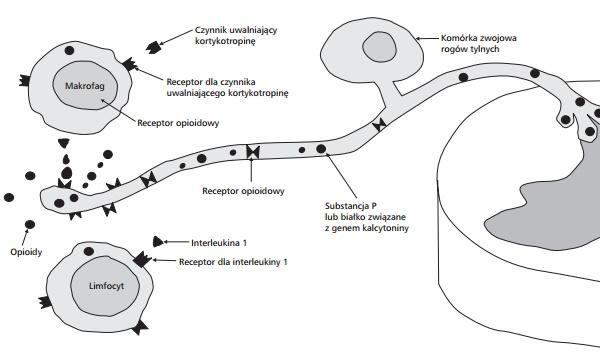
Depending on the drug group and pain ailments, their mechanism of action differs. Non-opioid drugs (NSAIDs) act on inflammation by irritating pain receptors and inhibiting cyclooxygenase production necessary for prostaglandin synthesis, molecules found in all tissues and body fluids. Opioids act on opioid receptors to a lesser or greater extent, depending on whether they are weak or strong opioids. Their mechanism is based on the drug molecule binding to opioid receptors, causing hyperpolarization, which reduces the excitability of nerve cells of the receptor and thus relieves pain.
Pain-relieving therapy with BPC-157
According to studies involving interaction between dopaminergic drugs and opioids, BPC-157 shows anti-receptor activity. Thanks to the peptide's action, pain antagonism occurs. Additionally, the pain-relieving effect of BPC-157 was noticeable at very low doses and in a short time. BPC-157's action is based on its effect through the central dopaminergic system. These studies show that the peptide BPC-157 is an innovative method of treating pain of varying intensity and different classifications.
Summary
Pain is a symptom accompanying us in everyday life. Its occurrence lowers our physical and mental well-being, which is why appropriate therapy allowing its relief is so important. Both therapy with already known drugs and therapy with the peptide BPC-157 bring expected results. Additionally, using the peptide BPC-157 allows elimination of pain of varying intensity, using a small dose that brings the expected therapeutic effect without causing addiction and acting safely.
Bibliography
1. Sikiric P., Hahm K., Blagaic A., Tvrdeic A., Pavlov K., Andrea Petrovic A., Brain-gut Axis and Pentadecapeptide BPC 157: Theoretical and Practical Implications. 2016, 14, 857-865; DOI:10.2174/1570159X13666160502153022
2. Żylicz Z., Krajnik M., How does pain arise? Neurophysiology of pain. 2003, 2, 1, 49–56.



Therapeutic effect of the BPC-157 peptide in treating the consequences of addictions.
BPC-157 peptide therapy in supporting sports injuries in athletes and physically active people