 English


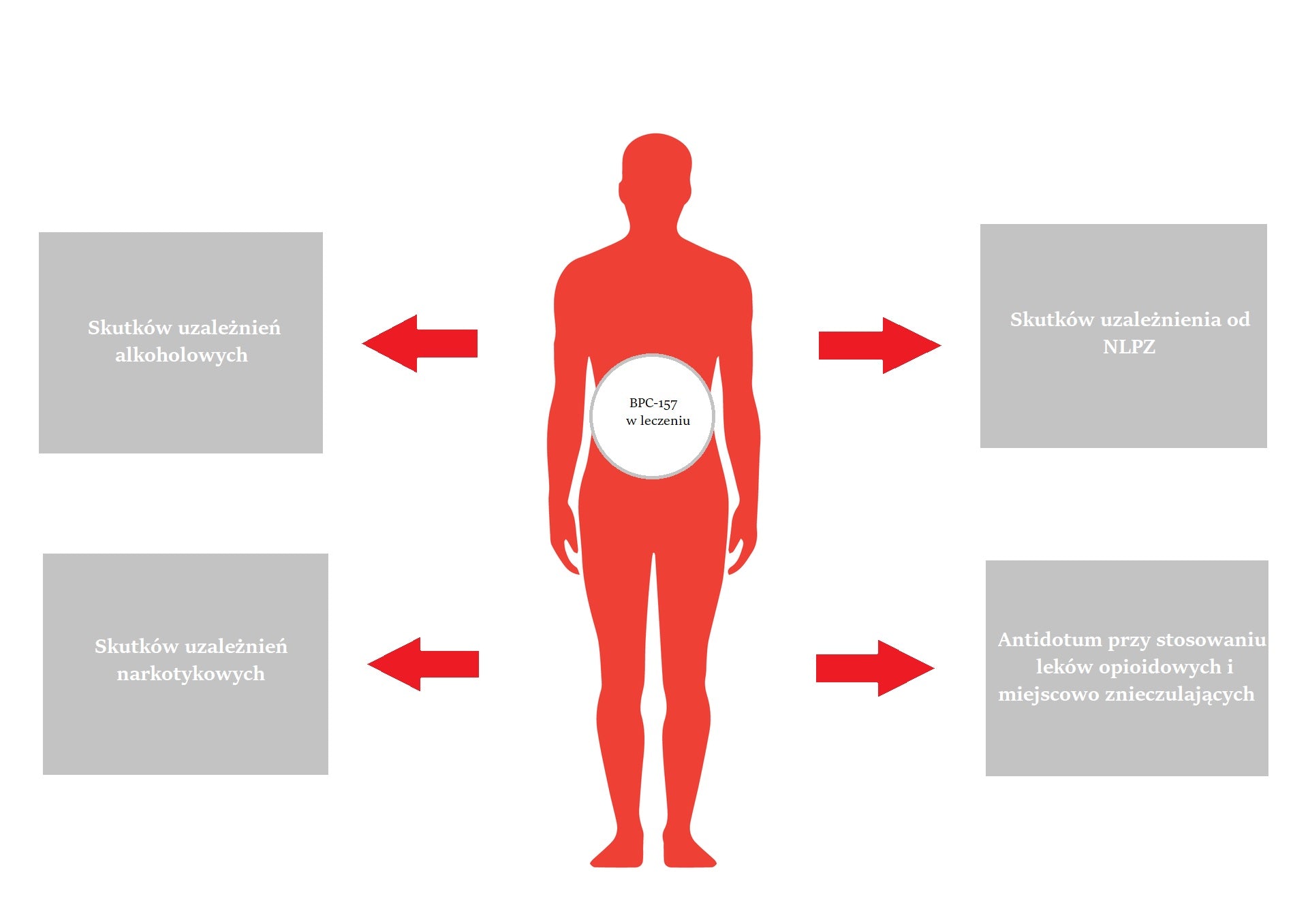
Summary: The BPC-157 peptide, showing a broad range of effects, is also used in treating the consequences of addictions and alleviating unwanted symptoms during withdrawal syndromes from these substances. Therefore, BPC-157, both in parenteral and oral forms, can confidently be indicated as a precursor helpful in treating various groups of addictions.
Keywords: addiction; nonsteroidal anti-inflammatory drugs; BPC-157 therapy; overdose; paracetamol; alcohol addiction; drug addiction; withdrawal syndrome; local anesthetics; opioid drugs; morphine; lidocaine; diclofenac; amphetamine; alcohol
List of abbreviations: BPC - Body Protection Compound; NSAIDs - Nonsteroidal Anti-Inflammatory Drugs. Therapy with the BPC-157 peptide is a precursor therapy that acts on and influences the negative disease effects caused by addiction to certain substances. BPC-157 therapy allows combating adverse effects from the abuse of alcohol, drugs, NSAIDs, opioid drugs, and local anesthetics.
Treatment of the consequences of addiction to NSAIDs
Concept of NSAIDs
NSAIDs are nonsteroidal anti-inflammatory drugs, which are the most commonly used agents in pain relief. Their action profile is characterized by pain-relieving, anti-inflammatory, fever-reducing, and anti-clotting effects. Most drugs in this group are available without a doctor's prescription, which increases the risk of NSAID addiction. It is common for patients to use several NSAIDs without proper knowledge of the consequences of such behavior and without medical consultation, which limits control over their safe use. Self-treatment can lead to addiction to NSAIDs and serious consequences related to changes in the digestive system, kidneys, liver, or respiratory system in people with asthma. Educating the patient on how NSAID therapy should be conducted and combating side effects arising from improper, addictive therapy is an important aspect for maintaining and restoring health.
BPC-157 therapy in treating the consequences of NSAID addiction
An example of the effectiveness of BPC-157 peptide therapy regarding the abuse of NSAIDs is aspirin, also known as acetylsalicylic acid. Aspirin's action profile is based on inhibiting cyclooxygenase activity, thereby preventing prostaglandin synthesis, which leads to reduced inflammation. This effect is desirable, and aspirin use in specified doses and intervals is safe. Other cyclooxygenase inhibitors include ibuprofen, diclofenac, and paracetamol. Unfortunately, these substances, due to their rapid action and availability, are often abused, which brings a serious range of side effects such as nausea, vomiting, stomach ulcers, headaches, consciousness disorders, mood lowering, and even risk of heart attack or stroke. BPC-157 therapy is a precursor, modern, and safe therapy enabling treatment of effects caused by addiction to NSAIDs. BPC-157's action profile in treating side effects caused by NSAIDs is based on protein phosphorylation, inhibition of protein denaturation, stabilization of lysosomal and cellular membranes, inhibition of complement activation, inhibition of proteases and protein kinases, and fibrinolytic activity.
Hepatoprotective effect of BPC-157 in NSAID abuse
The hepatotoxic effect of NSAIDs is also mitigated by BPC-157, especially in the case of paracetamol, diclofenac, and ibuprofen. Hepatotoxicity, mainly of paracetamol, is attributed to its conversion into a highly reactive metabolite called N-Acetyl-p-benzoquinone imine (NAPQI) by microsomal enzymes from the P450 family. BPC-157 peptide action causes inhibition or reversal of this process. BPC-157's hepatoprotection is extensive, acting in acute, chronic, and even advanced stages of liver disease, and administration of the peptide both parenterally and orally is a practical and convenient option for liver protection. Additionally, in cases of diclofenac or ibuprofen abuse, BPC-157 allows recovery of liver functions by almost completely normalizing (ALT) or significantly lowering (AST) enzyme levels. BPC-157's action also includes counteracting portal hypertension and liver-stomach hypertension.
BPC-157 treatment in paracetamol overdose
Studies on paracetamol overdose have shown rapidly induced, progressive hepatic encephalopathy with accompanying seizures and damage in several brain areas. BPC-157 therapy is effective in treating paracetamol toxicity. The peptide's action reduces liver and brain damage, especially when administered immediately after paracetamol. BPC-157 used in paracetamol addiction conditions eliminated seizures by reducing neuron activity and interstitial swelling without inflammatory response. These studies prove that BPC-157 peptide safely brings the expected positive therapeutic effect even in the most advanced states causing harmful processes due to paracetamol overdose.
Treatment of the consequences of alcohol addiction
Alcohol addiction
Alcohol addiction is a common phenomenon in every social group. Alcoholic beverages are easily accessible, which can result in alcoholism to a lesser or greater degree. Addiction or even alcohol abuse is a chronic disease that progresses and, if untreated, can end in death. The disease called alcoholism is multifactorial, affecting the physical and mental health of the patient. While alcohol abuse is a phenomenon that can be stopped, alcohol disease cannot be completely cured. In both cases, however, side effects arising during the alcoholic state can be minimized. Alcohol abuse leads to disorders of circulation, digestive, nervous, and respiratory systems. Studies indicate that the BPC-157 peptide allows minimizing disease effects accompanying alcohol addiction treatment.
BPC-157 therapy in treating the consequences of alcohol addiction
Research shows the beneficial effect of BPC-157 peptide on alcohol-related stomach changes occurring during addiction or alcohol abuse. Abuse of strong alcoholic drinks often leads to stomach ulcers, and as known from earlier articles, systematic use of the peptide leads to their elimination and stomach cytoprotection, creating a safe protective barrier. In the circulatory system, which is strained by alcohol's effects, blood pressure rises, and thanks to BPC-157 peptide, this system is restored to proper functioning, leading to normal blood flow. BPC-157 allows lowering chronic portal pressure caused by alcohol. Additionally, using the peptide during therapy, where relapse may occur, prevents further chronic stomach damage caused by long-term alcohol drinking. BPC-157's action allows faster regeneration during acute alcohol poisoning. Studies also show that alcohol abuse affects the volume of grey matter in the brain, causing its reduction. BPC-157 peptide action increases serotonin synthesis in grey matter and antagonizes serotonin syndrome.
Treatment of the consequences of drug addiction
Drug addiction
Drug addiction is defined as a progressive disease leading to the body's wasting. A characteristic feature of the disease is the need to take a specific intoxicating substance causing psychological and physical addiction. The addicted person feels an inner compulsion to increase doses of psychoactive substances, losing control over their use. Undesirable symptoms of drug addiction include increased tolerance to intoxicating substances, continuing drug use despite unpleasant health, mental, and social consequences, and the appearance of withdrawal syndrome such as hand and muscle tremors, excessive sweating, irritability, hallucinations, depression, concentration deterioration, and anxiety.
Withdrawal syndrome
Withdrawal syndrome occurs when an addicted person stops taking certain substances or reduces their doses. Symptoms that may appear with withdrawal syndrome include slowed heart rate, lowered blood pressure, decreased levels of cortisol, decreased adrenaline levels, or lowered dopamine as the happiness hormone. Additionally, weight gain and attention, concentration, and memory disorders occur. Withdrawal symptoms are strongest during the first months after substance cessation; over time, the longer the abstinence period, the weaker the withdrawal symptoms become.
BPC-157 therapy in treating the consequences of drug addiction
Laboratory studies show that in the case of amphetamine use combined with BPC-157 peptide treatment, the drug's effect is reduced. During studies, it was observed that at the peak of stereotypical excitability behavior, additional treatment with amphetamine alongside the peptide quickly and lastingly reduces its effect. Using BPC-157 during withdrawal syndrome, where symptoms such as tremors, shaking, violent convulsions, panic attacks, and flight may occur, reduces these effects. BPC-157's action profile in treating amphetamine addiction involves reducing activation of the dopaminergic system in the striatum, which immediately interferes with amphetamine activity. In a state of elevated dopamine levels due to amphetamine, BPC-157 prevents its release and resulting consequences.
BPC-157 therapy regarding local anesthetics
Local anesthetics
Local anesthetic drugs act locally by paralyzing nerve fibers and blocking pain stimuli. The anesthesia effect is reversible, lasting for a certain time depending on physicochemical properties. Common side effects of local anesthetics include numbness of the tongue and lips, metallic taste, drowsiness, vision disturbances, blood vessel dilation, or ringing in the ears. At higher doses, side effects can be dangerous and life-threatening, such as seizures, loss of consciousness, depression of respiratory and circulatory centers, slow heart rate, and even cardiac arrest. Therapy with BPC-157 peptide allows reversing adverse disease effects caused by local anesthetic abuse.
BPC-157 as an antidote to local anesthetics
Presenting BPC-157 peptide as an antidote, using lidocaine as an example, allows classification of its action profile leading to depolarization in non-transfected HEK 293 cells. Administering BPC-157 may weaken the development of adverse effects caused by lidocaine. As known, BPC-157 largely interacts with the NO system. Administering BPC-157 shortens lidocaine's duration of action. BPC-157 also counteracts side effects induced by lidocaine such as heart rhythm disturbances and eliminates the risk of seizures related to its action. Furthermore, BPC-157 may have a particular effect on the vascular system and thus on lidocaine's retention time in the body by dilating and locally vascularizing.
BPC-157 therapy regarding opioid substances
Opioid drugs
Opioids are used in pain treatment and belong to one of the main groups in this therapy. Rational dose selection and proper use of opioid drugs, through knowledge of their mechanisms of action, allow avoiding side effects related to their use. Due to their action profile, they directly affect three types of opioid receptors μ (MOR), δ (DOR), and κ (KOR). Weak opioid drugs include codeine, dihydrocodeine (DHC), and tramadol. Strong opioids include morphine, fentanyl, buprenorphine, methadone, tapentadol, oxycodone, and pethidine. Using the example of the strong opioid morphine, we can indicate the therapeutic effect of BPC-157 in opioid drug abuse or poisoning.
BPC-157 therapy in treating opioid drug poisoning
In studies concerning morphine, BPC-157 induces serotonin release in specific nigrostriatal brain areas and affects the serotonergic and dopaminergic systems. This causes beneficial effects in overstimulated or damaged dopaminergic, serotonergic, and GABAergic systems. BPC-157 action leads to analgesia, meaning the absence of pain stimuli perception from morphine without indirect effects. BPC-157's effect during opioid drug poisoning treatment can be observed even at very low doses. The peptide induces enhancement of morphine's antinociceptive effect, indicating that BPC-157 acts mainly through the central dopaminergic system, leading to reduction of unwanted effects caused by opioid drugs, assistance during poisoning, and protection against their harmful action.
Bibliography
1. Sikiric P, Seiwerth S, Rucman R, Turkovic B, Rokotov D, Brcic L, Toxicity by NSAIDs. Counteraction by Stable Gastric Pentadecapeptide BPC 157 Predrag. 2013; 19: 76-83; DOI:10.2174/1381612811306010076
2. Sikiric P, Seiwerth S, Rucman R, Kolenc D, Vuletic L, Drmic T, Grgic D, Strbe S, Zukanovic G, Brain-gut Axis and Pentadecapeptide BPC 157: Theoretical and Practical Implications. 2016; 14(8): 857–865; DOI:10.2174/1570159X13666160502153022,
3. Lozic M, Stambolija V, Krezic I, Dugandzic A, Zivanovic-Posilovic G, Gojkovic S, In relation to NO-System, Stable Pentadecapeptide BPC 157 Counteracts Lidocaine-Induced Adverse Effects in Rats and Depolarisation In Vitro. 2020; DOI:10.1155/2020/6805354
4. Jelovac N, Sikiric P, Petek M, Perovid D, Marovid A, Seiwerth S, A Novel Pentadecapeptide, BPC 157, Blocks the Stereotypy Produced Acutely by Amphetamine and the Development of Haloperidol-Induced Supersensitivity to Amphetamine; DOI:10.1016/S0006-3223(97)00277-1
5. Sikiric P, Seiwerth S, Blagaic B, Brcic L, Zoricici M, Stable gastric pentadecapeptide BPC 157 in trials for inflammatory bowel disease. 2006; 214–221, DOI:10.1007/s10787-006-1531-7



BPC-157 in the urinary and reproductive system. Peptide therapy in kidney diseases.
Pain treatment. Pain-relieving use of therapy with the peptide BPC-157