 English


Therapy with the NL-GHK-Cu peptide allows maintaining proper blood flow in our body, and consequently, the peptide is helpful in the prevention of cardiovascular diseases, enabling the maintenance of a healthy body and, as a result, prolonging life.
| Abstract: Cardiovascular diseases are the most common cause of death worldwide. Heart failure is described as a new, non-communicable epidemic, which is why proper care of the cardiovascular system is so important. A modern therapy that helps in this prevention is therapy with the NL-GHK-Cu peptide. Keywords: •NL-GHK-Cu •cardiovascular system •heart structure •heart function •structure of blood vessels •blood circulation in the bloodstream •cardiovascular diseases •cardiotoxicity •fibrinogen suppression •vein •artery •circulatory system |
Introduction
Cardiovascular diseases are a group of disorders of the heart and blood vessels. The most important risk factors for heart diseases include, among others, arterial hypertension, lipid metabolism disorders, diabetes, tobacco smoking, improper nutrition, sedentary lifestyle, overweight and obesity, excessive chronic stress, age, and gender. The action of the NL-GHK-Cu peptide allows for the elimination of diseases related to the cardiovascular system, associated with age, heredity, mechanical injuries, or improper lifestyle by regulating fibrinogen levels and counteracting cardiotoxicity.
HEART STRUCTURE
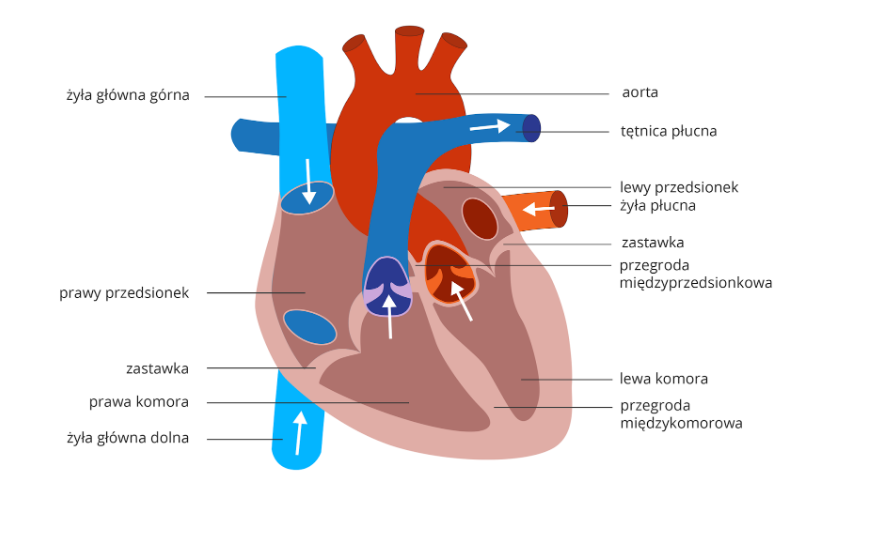
The circulatory system, as a closed system transporting blood, consists of the heart and blood vessels. The main component of the circulatory system is the aforementioned heart, located in the mediastinum behind the sternum, which is made of striated muscle tissue, enabling contractions that cause blood circulation in the blood vessels. The heart's structure includes two atria and two ventricles, the right and left ventricles. Since the atria only pump blood to the ventricles, their walls are thinner than the walls of the ventricles, which pump blood to all the arteries. For blood to reach even the most distant cells of the body, its pressure must be high enough to have this capability. Veins that carry blood to the heart open into the atria, and arteries that carry blood away from the heart exit from the ventricles. Between the atria and ventricles, as well as at the exit of the vessels from the ventricles, there are valves that open only in one direction, enforcing one-way blood flow and preventing backflow. 
HEART FUNCTION
The heartbeat is a continuous process because the lack of blood supply to any organ through its beating leads to irreversible, dangerous changes and tissue death. Blood brought by veins is first delivered to both atria, and when they contract, the supplied blood is pushed into the heart ventricles. At the moment of ventricular contraction, blood is pushed from the heart into the arteries. After this stage, the heart remains in a short resting period, and when it relaxes, its atria fill with blood again.
STRUCTURE OF BLOOD VESSELS
Blood is distributed throughout the body via blood vessels, specifically arteries, veins, and capillaries. The outer part of the blood vessels forms their protective layer, the middle layer is made of smooth muscle tissue, which allows them to constrict or dilate, thus regulating blood flow, while the inner layer is thin and smooth to ensure free blood flow. Blood in the arteries flows under very high pressure, so the muscle layer and inner membrane are thick. Conversely, the muscle layer of veins is thin due to the low blood flow pressure. The inner membrane forms valves that prevent blood from flowing backward and help pump blood against gravity. Between arteries and veins, there are connections in the form of very thin capillaries forming dense networks. The walls of capillaries are made of only one layer of cells, i.e., simple squamous epithelium, which allows gas exchange and the passage of various substances into and out of the vessels. 
BLOOD CIRCULATION IN THE CIRCULATORY SYSTEM
Blood flow is possible thanks to a closed system consisting of two circulations, the small and the large. In the small circulation, also called the pulmonary circulation, the flowing blood contains a large amount of carbon dioxide and a negligible amount of oxygen is pumped from the right ventricle to the pulmonary arteries. These then branch into smaller arterioles, eventually becoming thin capillaries surrounding the pulmonary alveoli. Gas exchange occurs between the blood in the capillaries and the pulmonary alveoli, where, by diffusion, the blood releases carbon dioxide and absorbs oxygen. Oxygenated blood returns through venous capillaries, which gather into larger venous vessels. Through the pulmonary veins, blood carrying a lot of oxygen flows into the left atrium. At the moment of contraction occurring in the left atrium, blood flows into the left ventricle, where the work of the second circulation, the systemic circulation, begins. Then blood from the left ventricle enters the largest artery of the body, the aorta, which branches into smaller arteries that, approaching the body's cells, form a system of capillaries. Through them, oxygen and nutrients are delivered to the vicinity of the cells, and metabolic waste products are removed. Gas diffusion occurs in the cells, i.e., internal gas exchange. Oxygen travels to the tissues, and carbon dioxide penetrates from the tissues into the capillaries. Deoxygenated blood is collected into venous capillaries, which join into larger venous vessels. The main veins from the upper and lower parts of the body carry blood with carbon dioxide to the right atrium. 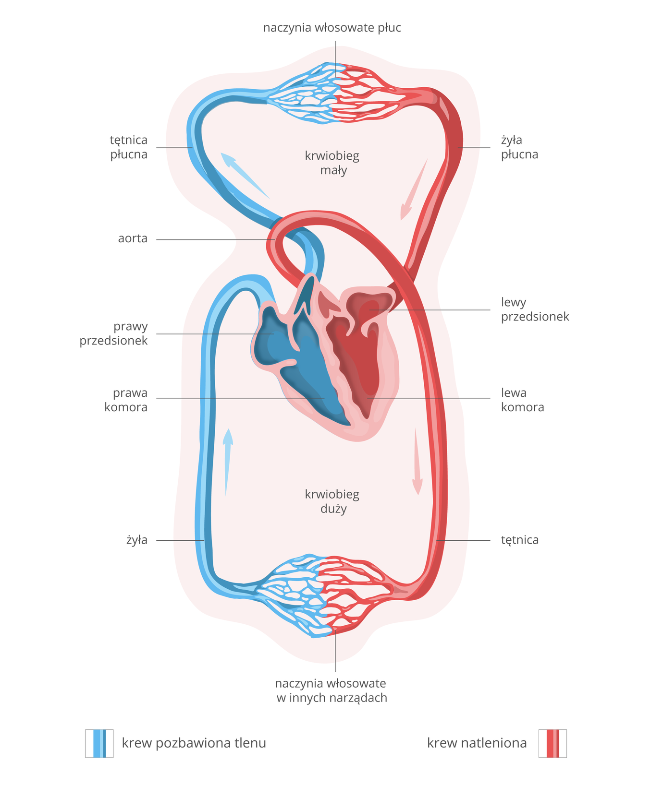
MOST COMMON CARDIOVASCULAR DISEASES
Ischemic heart disease, i.e., acute coronary syndromes, heart failure, cardiomyopathies, structural defects of the heart muscle, valvular defects, heart rhythm and conduction disorders Symptoms: The most common symptom of coronary artery disease is chest pain accompanied by a feeling of pressure and squeezing in the chest. The pain is usually located behind the sternum and occurs when exposed to excessive stress or during physical exertion. Additionally, there may be problems with proper breathing and nausea. Chronic venous insufficiency, varicose veins, venous thromboembolic disease Symptoms: visibly enlarged superficial veins that resemble cords or dark-colored networks with palpable bulges, swelling of the legs and feet, dull or burning pain, especially after prolonged standing, feeling of heaviness in the legs, itching, tingling, muscle cramps. Hypertension Symptoms: This condition is characterized by headaches and insomnia, palpitations, tinnitus, spots before the eyes, and even dizziness. Heart failure Symptoms: In patients with heart failure, swelling caused by water retention in the body, as well as shortness of breath and fatigue, can often be observed. Heart attack Symptoms: Patients complain of severe pain behind the sternum, sudden exertional shortness of breath, severe abdominal pain with vomiting or nausea, severe dizziness, fainting or loss of consciousness, palpitations, weakness. Heart arrhythmia Symptoms: Feeling that the heart beats too slowly or too fast, shortness of breath, difficulty breathing, choking sensation, angina, fainting, loss of consciousness, dizziness, anxiety, restlessness, memory disorders. Stroke Symptoms: Patients with this disease experience limb weakness in the leg or arm and asymmetry of the lower part of the face around the mouth. Rheumatic heart disease Symptoms: Manifests as shortness of breath and chest pain, especially behind the sternum. The pain may radiate to the back, neck, or left shoulder. Pain symptoms increase during coughing and lying down; additionally, some may experience tachycardia and palpitations or swelling of the ankles and lower legs. Raynaud's syndrome Symptoms: The consequence is the paling of fingers on the hands or feet (sometimes it can be the nose or auricles). Cardiopulmonary syndrome Symptoms: Characterized by palpitations, shortness of breath, fainting, cold hands and feet, and cyanosis of the skin, which may even include earlobes, lips, and nose.
POSITIVE EFFECT OF GHK-CU ON CARDIOTOXICITY
Cardiotoxicity manifests, among others, as heart rhythm disturbances, affecting its efficiency. Thanks to the action of the NL-GHK-Cu peptide, the risk of these ailments and accompanying dizziness, weakness, fatigue, shortness of breath, and fainting is reduced. The effects of cardiotoxicity induced by the use of NL-GHK-Cu significantly change the parameters related to stroke volume, ejection fraction, and fractional shortening according to studies. The research also included the expression of the recombinant tripeptide along with purification and characterization of chemical properties, which for the first time revealed the strong function of the NL-GHK-Cu peptide in protecting against cardiotoxicity.
POSITIVE EFFECT OF GHK-CU ON FIBRINOGEN SUPPRESSION
Regardless of the cause of the increase in fibrinogen concentration in plasma, it should be remembered that it always remains a negative predictor of the development of thromboembolic diseases. The use of the NL-GHK-Cu peptide has a significant impact on blood flow through the microcirculation, where blood acts as a thixotropic fluid. Thanks to the peptide, fibrinogen levels are regulated, and recent studies have shown that fibrinogen level is a major risk factor for cardiovascular diseases. Additionally, NL-GHK-Cu inhibits the production of interleukin-6, the main regulator of fibrinogen production. As gene profile data indicate, NL-GHK-Cu reduces the frequency of the beta chain fibrinogen gene occurrence. 
BIBLIOGRAPHY
-
L.Pickart, A.Margolina, Regenerative and Protective Actions of the GHK-Cu. 2018; 19; doi:10.3390/ijms19071987



NL-GHK-Cu in reducing pain and inflammation of the body
Peptide therapy NL-GHK-Cu in the elimination of hair loss and weakening process