 English


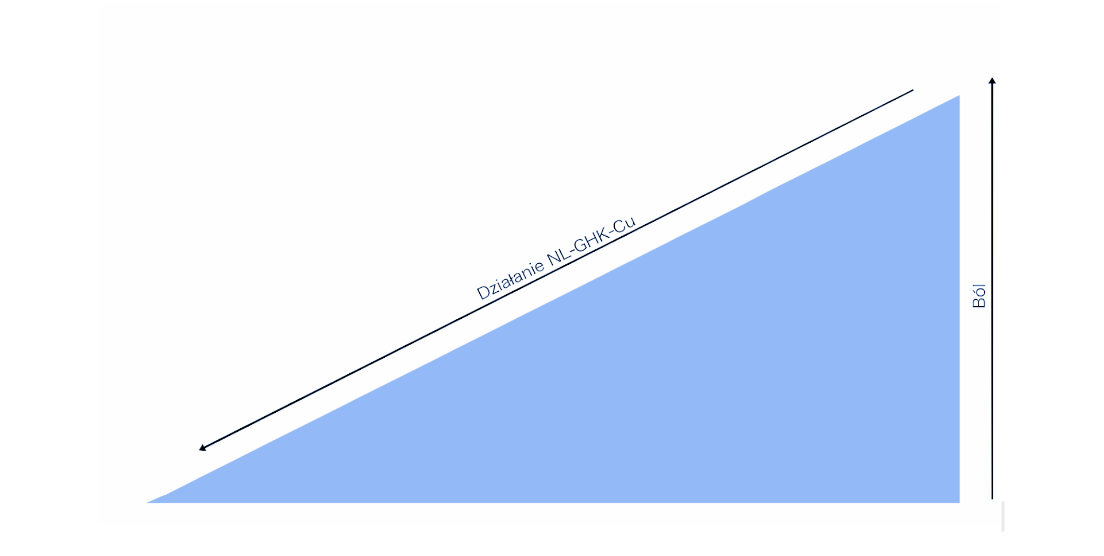
NL-GHK-Cu peptide therapy allows for the restoration of comfort in daily life by eliminating pain and inflammatory conditions in the body. Additionally, it is a modern peptide therapy that significantly reduces the occurrence of these ailments.
| Summary: The mechanisms of both pain and inflammation are complex and require proper therapeutic management. If treated incorrectly, these ailments can lead to many unpleasant symptoms and consequences. According to studies, the NL-GHK-Cu peptide is used in pain treatment and inflammation elimination as a modern peptide therapy. Keywords: •NL-GHK-Cu •pain •acute pain •chronic pain •localized pain •generalized pain •referred pain •multisite pain •inflammation •NL-GHK-Cu therapy |
Introduction
By definition, pain is an unpleasant and negative sensory and emotional experience that arises from stimuli that damage tissue or threaten to damage it. Inflammation, on the other hand, is the body's defensive reaction to stimuli that damage its tissues. The purpose of inflammation is to create an environment for the repair and regeneration of damaged tissues. Both mentioned ailments, pain and inflammation, lead to a deterioration in daily life and functioning. The mechanisms of both pain and inflammation are complex and require proper therapeutic management. If treated incorrectly, these ailments can lead to many unpleasant symptoms and consequences. According to studies, the NL-GHK-Cu peptide is used in pain treatment by reducing serotonin release and eliminating inflammation by, among other things, reducing the production of proinflammatory cytokines as a modern peptide therapy.
PAIN
Pain, as an unpleasant sensory and emotional feeling, is associated with actual, ongoing, or threatened bodily damage. Pain usually occurs as a result of irritation of receptors, specifically pain receptors—nociceptors—or lowering the excitability threshold of receptors. The primary function of pain is its protective-warning role, which alerts to threatening tissue damage caused by injury or illness, triggering the body's response aimed at minimizing the effects of the damage.
Pain forces a reduction in physical activity, which in this case is a positive phenomenon because the accompanying increased tissue sensitivity prevents further damage. In most cases, initially occurring acute pain disappears within a short time—from several hours to several days—with proper pain management. In cases of improper pain management, pathophysiological changes in the central nervous system increase, and the initial acute pain transforms into chronic pain, which is why proper and effective management at the first signs of pain is so important.
PATHOMECHANISM OF PAIN
- Acute pain
The term nociception refers to the process of pain formation, which includes four stages: transduction, conduction, modulation, and perception. In the first stage, transduction, the energy of a working, damaging stimulus—mechanical, thermal, or chemical—is converted into an electrical impulse conducted by nerve fibers in the peripheral nerve endings of the nociceptive neuron. This leads to tissue damage, which causes the release of bradykinin, serotonin, and substance P responsible for the development of neurogenic inflammation at the injury site, manifested by pain sensation as well as redness and swelling. The information encoded as an electrical impulse reaches the dorsal root ganglia of the spinal nerves during conduction, where excitatory amino acids, substance P, and neurokinin A are released and transported to synapses formed by the central endings of the nociceptive neuron in the dorsal horn of the spinal cord. From the dorsal horn, nociceptive information is transmitted to higher centers of the central nervous system. The final stage of nociception is perception, which takes place in the brain. It serves a cognitive role and is responsible for awareness of the pain stimulus, its evaluation, and affective and emotional responses. Here, among others, fear, aggression, and anger arise, and behavior patterns related to remembered pain are shaped.
- Chronic pain
Chronic pain refers to pain experienced over a longer period, professionally defined as pain symptoms lasting longer than 3 months or persisting despite healing of damaged tissues. Increasingly, chronic pain is recognized as a disease in itself, requiring specific and specialized therapeutic management. Patients suffering from chronic pain experience symptoms that reduce quality of life, including physiological, psychological, and social disorders. Their severity depends on the duration and intensity of the pain, not on the cause of the pain.
PAIN LOCATION
Localized pain
As the name suggests, localized pain is confined to one specific place. Examples of local pain include pain in a particular part of the abdomen or toothache.
Referred pain
Referred pain, also called projected pain, is one of the so-called transferred pains. It most often radiates from internal organs to the skin because each internal organ is assigned a dermatome. This is a point on the skin that receives stimuli through the same spinal nerve as the connected organ. Referred pain is often accompanied by contraction of the corresponding muscles. This ailment is not a separate disease but a symptom of a completely different condition. Referred pains most often appear in the cervical, thoracic, and lumbar spine areas. For example, referred pain in the cervical spine may indicate angina or peritonsillar abscesses.
Generalized pain
This type of pain is mainly felt with damage to the somatic nervous system. This pain is not related to specific receptors in a given part of the body; rather, the entire nervous system suffers.
Multisite pain
Pain occurring in ≥4 out of 5 body areas, excluding the jaw, chest, and abdomen.
INFLAMMATORY CONDITION OF THE BODY
Inflammation is a type of defensive reaction of the body in response to damaging factors. Immune system cells, connective tissue cells, certain blood proteins, and blood vessels participate in the inflammatory response. The purpose of inflammation is to limit the harmful factor, neutralize it, and repair damaged tissues.

COURSE OF THE BODY'S INFLAMMATORY RESPONSE
Warming, redness, and swelling of the inflamed area are direct consequences of the vascular reaction to tissue damage. This leads to a rapid, short-term vessel constriction followed by prolonged dilation. At the same time, the permeability of the capillary endothelium increases, causing fluid to move into the extravascular space and resulting in swelling. Next, immune cells migrate to the site of tissue damage, forming an inflammatory infiltrate. The first cells to appear at the inflammation site are neutrophils. Next come eosinophils (in allergic reactions) and lymphocytes and macrophages (in chronic inflammation). Leukocyte migration from the intravascular space depends on the presence of adhesion molecules on the surface of endothelial cells and leukocytes.
PAIN-RELIEVING EFFECT OF NL-GHK-CU
Studies have shown that the NL-GHK-Cu peptide exhibits pain-relieving effects. In particular, the peptide component L-lysine plays a key role in the pain-relief process. The peptide's action regulates and triggers peptidase activity and the formation of tissue-specific processing products. It has also been proven that NL-GHK-Cu reduces serotonin release responsible for the development of neurogenic inflammation at the injury or damage site, which manifests as pain symptoms.
ANTI-INFLAMMATORY EFFECT OF NL-GHK-CU
It has been shown that the NL-GHK-Cu complex helps inhibit inflammatory and fibrotic changes, alleviates the inflammatory response by reducing levels of proinflammatory cytokines, TNF-ɑ and IL-6, and MPO activity (myeloperoxidase concentration). Furthermore, NL-GHK-Cu significantly reverses the MMP-9/TIMP-1 imbalance and partially prevents EMT (epithelial-mesenchymal transition) through the Nrf2, NF-κB, and TGFβ1 pathways, as well as Smad2/3 phosphorylation.

BIBLIOGRAPHY
1. Wordliczek J., Dobrogowski J., Pain treatment. 2007; 11-27:2
2. Wordliczek J., Dobrogowski J., Pain medicine. 2004; 17-39
3. Pickart L., Margolina A., Regenerative and Protective Actions of the GHK-Cu Peptide in the Light of the New Gene Data. 2017; 19(7):1987. doi: 10.3390/ijms19071987
4. Sever'yanova L., Dolgintsev M., Effects of Tripeptide Gly-His-Lys in Pain-Induced Aggressive-Defensive Behavior in Rats. 2017; 164(2):140-143. doi: 10.1007/s10517-017-3943-3
5. Wen-Hui M., Meng L., Hai-Feng M., Wei L., Li L., Yan Y., Xiao-Ming Z., Gang H., Protective effects of GHK-Cu in bleomycin-induced pulmonary fibrosis via anti-oxidative stress and anti-inflammation pathways. 2019; 15;241:117139. doi: 10.1016/j.lfs.2019.117139.


NL-Epithalon in supportive therapy for treating obesity
NL-GHK-Cu in the prevention of heart and blood vessel diseases