 English


Therapy with the peptide NL-GHK-Cu during the occurrence of the most common lung diseases and injuries. The protective role of the peptide allowing the maintenance of a properly functioning respiratory system.
Abstract: Almost half of the processes occurring in cells cannot do without the involvement of oxygen. Unfortunately, the body cannot store it. Therefore, the respiratory system must constantly supply cells with this life-giving gas, which is why maintaining a healthy and properly functioning respiratory system is so important. The NL-GHK-Cu peptide, which is a safe and non-toxic peptide, shows the ability to activate multiple pathways allowing therapy that alleviates symptoms of respiratory diseases, especially of the lungs. Additionally, therapy with the NL-GHK-Cu peptide helps maintain a healthy and properly functioning respiratory system and all its components.
Keywords: NL-GHK-Cu; respiratory system; lungs; lung diseases; bronchitis; pneumonia; asthma; tuberculosis; COPD; therapy; respiratory failure; lung damage; pulmonary fibrosis; protection; safeguarding; gas exchange
Introduction
It is known that the peptide NL-GHK-Cu, being a naturally occurring peptide, exhibits a safe, non-toxic, and broad spectrum of action. It is released in the body during injury, which is why therapy using it can be progressively utilized both in protecting the function of the respiratory system and in therapy supporting the regeneration of its elements, especially the lungs, because most frequently occurring diseases within this system concern them.
STRUCTURE OF THE RESPIRATORY SYSTEM
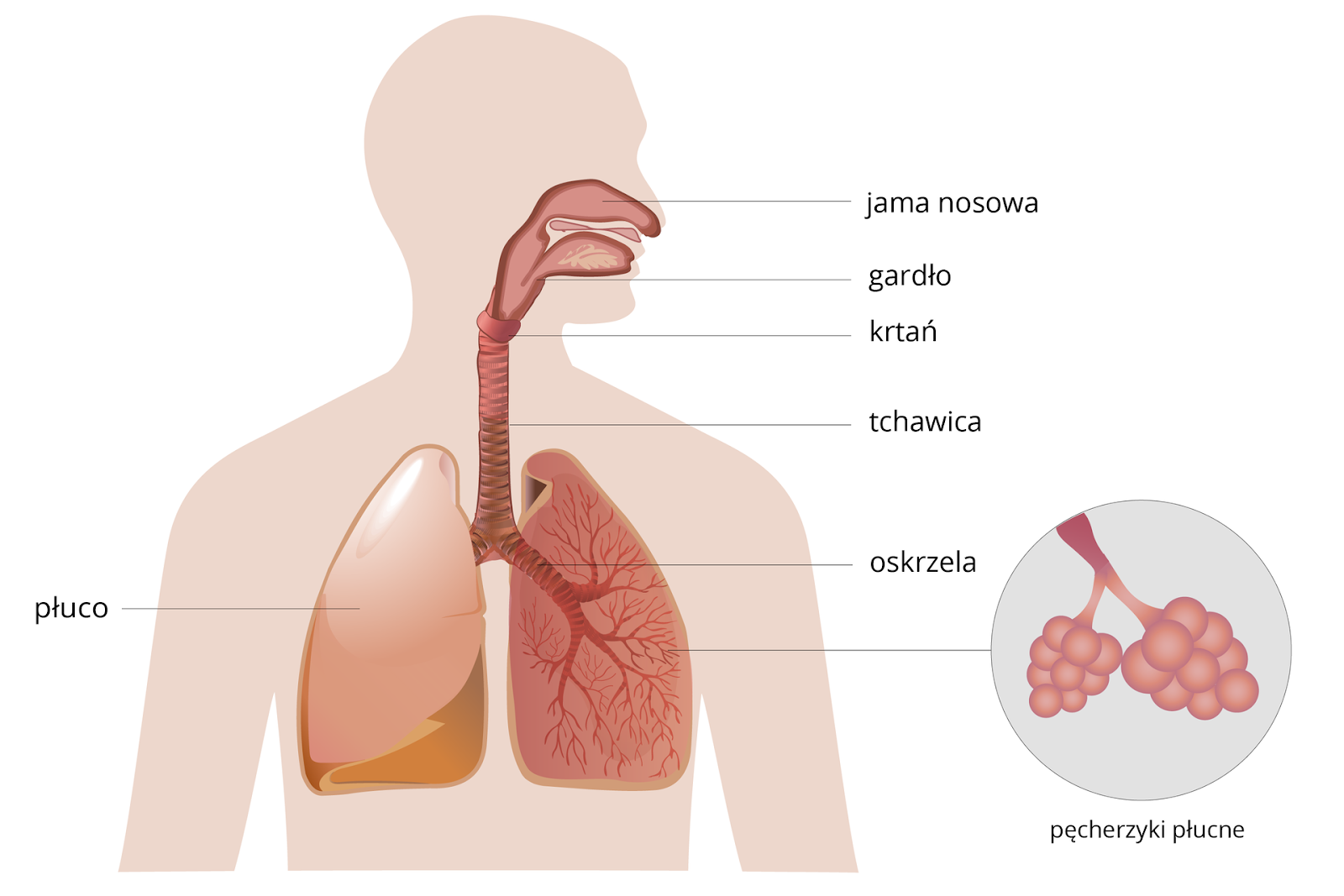
The respiratory system consists of the upper and lower respiratory tracts and the gas exchange organ, the lungs. The upper respiratory tract includes the nasal cavity and pharynx. The lower respiratory tract includes the larynx, trachea, and bronchi. The proper and main organ of breathing is the lungs. Additionally, the respiratory system includes respiratory muscles such as the diaphragm, external and internal intercostal muscles, and accessory respiratory muscles.

FUNCTIONS OF THE RESPIRATORY SYSTEM
The respiratory system ensures efficient uptake and transport of respiratory gases, namely oxygen and carbon dioxide, as well as gas exchange consisting of the uptake of oxygen from the lungs into the blood and the removal of carbon dioxide from the blood to the lungs and then further through the respiratory tract outside the body. Specifically, each element of the respiratory system performs its specific function: in the case of the nasal cavity, it is the purification, warming, and humidification of the inhaled air; in the case of the larynx, it is enabling sound production; in the case of the trachea, it is the transport of air to the bronchi; and in the case of the main bronchi, the possibility of delivering air to the pulmonary alveoli. Focusing on the important process mentioned Gas exchange occurs as the bronchi divide into smaller branches ending in alveoli. Oxygen passes from the alveoli into the blood. It travels with the blood throughout our body and reaches all its cells. Carbon dioxide passes from each cell into the blood. It is brought to the lungs, where it passes from the blood into the alveoli. Then it is removed with the exhaled air. Both processes, i.e., oxygen uptake into the blood and carbon dioxide removal from it, occur simultaneously.
LUNGS
The lungs are shaped like large, spongy, and elastic sacs. They are gas exchange organs located in the chest cavity. They are externally protected by a thin double membrane called the pleura, which is filled with a small amount of fluid. It prevents damage to the lungs caused by friction against the ribs and other chest bones during breathing movements. Inside the lungs, the bronchi branch out like a tree, forming a system of increasingly smaller tubes called bronchioles. At their ends are the alveoli. The alveoli are surrounded by a dense network of capillaries. Gas exchange occurs between them and the air from the alveoli by diffusion. The penetration of oxygen into the blood and carbon dioxide from the blood into the alveoli happens very quickly and efficiently thanks to three basic aspects:
- The walls of the alveoli and capillary blood vessels are made of thin, single-layer flat epithelium;
- The network of capillaries covering the alveoli is very dense;
- The alveoli create a very large surface area for gas exchange. LUNG DISEASES
Proper functioning of the respiratory system is essential for maintaining the health and good condition of the entire body. Unfortunately, the number of people affected by lung diseases caused by various factors, including environmental, genetic, or an inappropriate lifestyle, is increasing year by year. The most commonly diagnosed lung diseases, apart from cancer, include sarcoidosis, cystic fibrosis, and chronic obstructive pulmonary disease (COPD).
| Symptoms | Cause | Treatment/Therapies | |
| Bronchitis |
- High fever -Malaise and weakness -Muscle pain -Wheezing breath |
-Viruses -Atypical bacteria -Complications after a cold |
-Antitussive drugs -Supportive: NL-GHK-Cu Therapy |
| Asthma |
-Wheezing breath -Dyspnea -Cough |
-Respiratory tract infection -Exposure to allergens -Physical exertion -Stress, very strong emotions -Irritants |
-Maintaining full control of disease symptoms -Prevention of exacerbations -Supportive: NL-GHK-Cu Therapy |
| Pneumonia |
-Elevated temperature -Chills -Sweating -Cough -Pain occurring in the chest |
-Consequence bronchitis -Chronic pulmonary congestion associated with weakened circulatory system |
-Antipyretic drugs -Antitussive drugs, -Oxygen therapy -Large amounts of fluids -Supportive: NL-GHK-Cu Therapy |
| Tuberculosis |
-Cough -Hemoptysis -Chest pain -Fever -Weight loss -Chills -Increased fatigue |
-Infection caused by a bacterium called tuberculosis bacillus (Mycobacterium tuberculosis). |
-Antibiotics -Antitubercular drugs -Supportive: NL-GHK-Cu Therapy |
| COPD |
-M-Persistent cough -Dyspnea -Shortness of breath -Chest tightness -Wheezing breath |
-Ongoing inflammation in the lungs, most often in smokers |
-Hospitalization -Intramuscular drug administration -Supportive: NL-GHK-Cu Therapy |
GHK-CU IN LUNG DISEASES
The NL-GHK-Cu peptide, which is a safe and non-toxic peptide, shows the ability to activate multiple pathways allowing therapy that alleviates symptoms of respiratory diseases, especially of the lungs. Additionally, therapy with the NL-GHK-Cu peptide helps maintain a healthy and properly functioning respiratory system and all its components.
GHK-CU THERAPY IN CASE OF ACUTE LUNG INJURY AND RESPIRATORY FAILURE
Acute lung injury (ALI), along with its most severe form, acute respiratory distress syndrome (ARDS), is a disorder of acute inflammation and tissue damage characterized by loss of alveolar-capillary membrane integrity, excessive migration of neutrophils into the epithelium, and release of proinflammatory and cytotoxic mediators leading to lung damage, which can result, among other things, in respiratory failure. NL-GHK-Cu Peptide Therapy: During conducted studies, it was shown that therapy with the NL-GHK-Cu peptide reduced the production of reactive oxygen species (ROS) and increased superoxide dismutase (SOD) activity while simultaneously decreasing the production of TNF-α and IL-6 by suppressing NF-κB p65 and p38 MAPK signaling, whereby the peptide weakened histological changes in the lungs caused by damage and suppressed the infiltration of inflammatory cells into the lung parenchyma, resulting in alleviation of lung injury and elimination of ongoing inflammation. Additionally, the NL-GHK-Cu peptide supported regenerative processes after inflammation.
GHK-CU THERAPY IN CASE OF PULMONARY FIBROSIS
Pulmonary fibrosis is a condition that, as a consequence of lifestyle, usually affects older people, but symptoms of this disease can also be recognized in children. There are many factors predisposing to the occurrence of pulmonary fibrosis. The most common causes include smoking, exposure to harmful dust, environmental factors, and certain medications.
NL-GHK-Cu Peptide Therapy: The GHK peptide alone, without connection to the copper component, has been used in degenerative neuropathies and disorders by suppressing the peroxidation process. In combination, the NL-GHK-Cu complex, thanks to the attached metal ion, activates copper- and zinc-dependent superoxide dismutase (SOD), promoting endogenous antioxidant activity. The NL-GHK-Cu complex reduces oxidative damage by inhibiting inflammation and decreasing the release of ferritin-bound iron in damaged tissues. Additionally, NL-GHK-Cu reduces the production of reactive oxygen species (ROS), increases SOD activity, and simultaneously decreases the release of pro-inflammatory cytokines in acute lung injury caused by fibrosis.
GHK-CU THERAPY IN CASE OF COPD
Chronic obstructive pulmonary disease (COPD) is a respiratory system disorder, most often caused by environmental factors. Patients suffering from COPD experience symptoms resulting from impaired airflow through the lungs. The disease itself has a poor prognosis, so early diagnosis and consequently the initiation of appropriate therapeutic and supportive treatment are important.
NL-GHK-Cu Peptide Therapy: It has been shown that the NL-GHK-Cu complex supports the remodeling and restructuring of connective tissue and modulates the expression of many genes, including the regulation of genes in the TGF-β pathway. In this way, NL-GHK-Cu demonstrates the ability to reverse the expression of key genes contained in the gene signature of COPD, i.e., chronic obstructive pulmonary disease. The expression of 127 genes was altered in COPD patients. More severe emphysema symptoms correlated with the degree of gene expression changes. Genes whose expression was associated with inflammation were increased, while genes involved in tissue remodeling and repair were significantly decreased. NL-GHK-Cu is a peptide that can reverse gene expression changes associated with emphysema destruction, such as reduced activity of genes involved in the TGF-β pathway, in such a way that under the influence of NL-GHK-Cu it was able to change the gene expression pattern to its opposite by activating the TGF-β pathway. NL-GHKCu may also have a beneficial effect on connective tissue. Lung fibroblasts from COPD patients, which had impaired ability to contract and restructure collagen, were supported by therapy with NL-GHK-Cu or TGF-β. Both molecules restored fibroblast function and increased the expression of integrin beta 1.
PROTECTIVE AND DEFENSIVE ROLE OF NL-GHK-CU
The use of the NL-GHK-Cu peptide protects lung tissue from induced acute lung injury (ALI) and inhibits the infiltration of inflammatory cells into the lungs. The NL-GHK-Cu peptide also increased superoxide dismutase (SOD) activity while reducing the production of TNF-1 and IL-6 by blocking the activation of NFκB p65 and p38 MAPK (mitogen-activated protein kinase). Mitogen-activated protein kinases are kinase enzymes that play a key role in cell signaling. The p38 MAPK pathways allow cells to respond to a wide range of external stressors and influence skin differentiation, apoptosis, mobility, and gene expression, demonstrating that therapy with the NL-GHK-Cu peptide has a protective effect on the respiratory system in the human body.
LITERATURE
- Park JR, Lee H, Kim SI, Yang SR. The tri-peptide GHK-Cu complex ameliorates lipopolysaccharide-induced acute lung injury in mice. Oncotarget. 2016;7(36):58405-58417. doi:10.18632/oncotarget.
- W Ma, M Li, H Ma, W Li, L Liu, Y Yin, X Zhou, G Hou. Protective effects of GHK-Cu in bleomycin-induced pulmonary fibrosis via anti-oxidative stress and anti-inflammation pathways 2019. 10.1016/j.lfs.2019.117139
- Pickart L, Margolina A. Regenerative and Protective Actions of the GHK-Cu Peptide in the Light of the New Gene Data. Int J Mol Sci. 2018;19(7):1987. Published 2018 Jul 7. doi:10.3390/ijms19071987
- Michajlik A. Human Anatomy and Physiology. PZWL Publishing House. 2009.


The anti-aging role of NL-Epithalon as a peptide ensuring longevity
NL-GHK-Cu in the nervous system