 English


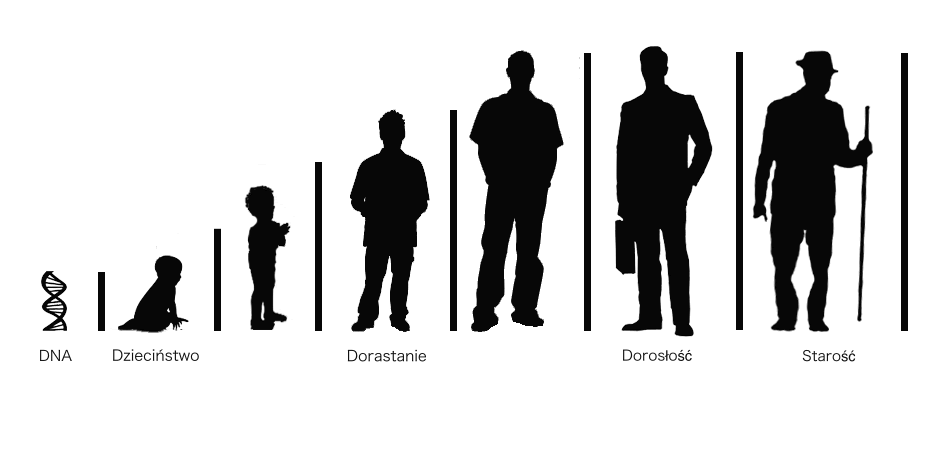
Anti-aging action of the body. Peptide therapy eliminating age-related diseases and supporting longevity.
Abstract: Epithalon, as a synthetic peptide that is an equivalent of the naturally occurring peptide epithalamin in the pineal gland, has broad properties that slow down the aging of the organism. Epithalon, among other things, slows down the action of telomerase, which consequently translates into the extension of cell life and slowing down of aging processes. Epithalon is also included among existing methods that allow slowing down the aging processes after research and experiments.
Keywords: NL-Epithalon; Epithalon; telomere; telomerase; gene expression; aging; old age; longevity; theory; antioxidation; Haitweek limit; Parkinson's; Alzheimer's; dementia; skin
Introduction
Scientific research and clinical studies have shown that Epitalon slows down the aging processes and has strong anti-aging properties. Additionally, so far, clinical studies have not shown any significant side effects, undesirable or toxic effects during the use of Epitalon.
BIOLOGICAL AGING OF THE BODY
With the end of the development period, during which the body is in a state of highest biological efficiency, the aging period begins for every person after the age of 25. It is during this period that a gradual deterioration of life functions related to physical, mental, and social aspects begins, as well as a reduction in the physiological reserves of organs and systems in our body. These components cause, among other things, a decrease in the body's ability to withstand physiological burdens such as prolonged and heavy physical effort, a decrease in the ability to fight all infections and injuries, and problems related to maintaining homeostasis. During the aging of the body, the following are reduced:
A.Lung vital capacity
B.Cardiac output
C.Reduced kidney filtration
D.Reduced absorption in the digestive tract
E.Reduced bone marrow activity According to the concept „Aging is a progressive and generalized impairment of the body's functions, leading to a loss of adaptive response to stress and an increasing risk of diseases.”
AGING AND OLD AGE
The biological aging of the body described above is a natural process associated with a decline in the body's functions, leading to changes in the body's systems and organs and a gradual deterioration of their functions, but not immediately significantly affecting the deterioration of overall life functions. Old age, on the other hand, is nothing other than an inevitable effect of the biological aging process. Aging is a natural and long-lasting process that develops gradually, during which the functions of organs affected by the biological aging of the body, over time, influence the overall life processes by weakening them, which affects the daily functioning of the body. In old age, new adaptive mechanisms also arise in the body that facilitate functioning during this process and the compensatory capabilities of the body are preserved.
BASIC SYMPTOMS OF HUMAN ORGANISM AGING
A.Disturbance of taste sensation and decreased pleasure from eating due to worsening ability to chew more thoroughly, reduced sensitivity of taste buds;
B.Cracking enamel and tooth loss;
C.Reduced flexibility of muscles, joints, and tendons caused, among others, by a decrease in collagen. Wearing down of articular cartilage;
D.Loss of elasticity of arterial vessels;
E.Worsening absorption of nutrients such as iron, calcium, magnesium, potassium, vitamin B12;
F.Gastrointestinal ailments;
G.Deterioration of memory and thinking processes;
H.Appearance of food intolerances, most often lactose;
I.Reduced sensation of thirst;
J.Problems related to sleep. Shortening of sleep duration and quality;
K.Problems related to worsening hearing and vision;
L.Changes in body composition, i.e., increased fat tissue and decreased muscle and bone tissue;
M.Slowing of metabolic rate;
N.Slowing of intestinal peristalsis, decreased acidity of gastric juice, reduced activity of digestive enzymes, which translates into a greater tendency to constipation, diarrhea, difficulties in digestion and absorption of selected nutrients;
O.Reduced ability of the body to cope with increased physical effort;
P.Decreased ability to concentrate, associate, and remember;
R.Changes in blood pressure;
S.Skin sagging, appearance of wrinkles, spots, and discolorations;
T.Weakening of the skin's defense functions, making it more susceptible to bacteria and toxins;
U.Increased susceptibility to diseases and decreased ability to cope with them.
CAUSES OF ORGANISM AGING/SELECTED THEORIES OF ORGANISM AGING
1.Somatic Mutation Theory The accumulation of damage to genetic material of random origin, as well as proteins, leads to a decrease in the organism's regenerative capacity, resulting in faster aging. Mutations can be caused, among others, by exposure to natural sources of radiation.
2.Error Catastrophe Theory The accumulation of errors occurring during protein synthesis, in translation and transcription, over time leads to damage to cellular functions, consequently accelerating the aging processes of the organism.
3.Free Radical Theory Reactive molecules related to oxygen metabolism can damage cell membrane proteins, enzymes, and DNA. With age, the production of free radicals increases, leading to the accumulation of tissue damage.
4.Protein Modification Theory As a result of some chemical reactions (e.g., glycation), changes occur in the structure of proteins, which accumulate and disrupt the functions of cells or tissues, leading to acceleration of the aging process.
5. Immunological theory Deterioration of immune system efficiency and weakening of T and B lymphocyte functions cause a decrease in resistance to infections and an increase in autoimmune diseases. A decline in immune surveillance leads to an increase in carcinogenesis.
6. Neuroendocrine theory Changes occurring in the nervous and hormonal systems, mainly on the hypothalamus-pituitary-adrenal axis, insulin, and growth factors, lead to abnormal organism responses to environmental stimuli.
7. Developmental-genetic theory Aging is the next stage of development and maturation of the organism, where catabolic processes prevail over anabolic ones, causing the onset of the aging process.

NL-EPITHALON AS AN ANTI-AGING PEPTIDE
Epithalon, as a synthetic peptide that is an equivalent of the naturally occurring peptide epithalamin in the pineal gland, has broad properties that slow down the aging of the organism. Epithalon, among other things, slows down the action of telomerase, which consequently translates into the extension of cell life and slowing down of aging processes. Epithalon is also included among existing methods that allow slowing down the aging processes after research and experiments.
TELOMERE Telomeres are endings located at the ends of chromosomes. They consist of conserved and oligomeric nucleotide sequences. Telomeres are primarily made up of chromatin, which is transcriptionally inactive, and the transcriptionally active subtelomeric region located directly behind the telomeres, which they protect. In the human body, the telomeric sequence consists of repeatedly repeated nucleotides. The length of telomeres depends on mechanisms occurring during the replication process, ranging between 2-10 kbp. Located at the ends of chromosomes, they serve to protect DNA strands from fragmentation and damage occurring during replication. Long telomeres guarantee a longer life and less burden from age-related diseases.
HAYFLICK LIMIT
During cell divisions, telomeres shorten until they completely disappear. The number of cell divisions is limited and defined by the so-called Hayflick limit, which is recognized as one of the factors of aging. However, it turns out that some cells have their own weapon against this phenomenon. It is telomerase, an enzyme that enables the reconstruction of telomeres.
TELOMERASE
The enzyme telomerase, as a reverse transcriptase, is responsible for maintaining the appropriate length of telomeres. Telomerase plays a key role, among others, in the process of cell proliferation. An integral component of telomerase is the RNA template used for DNA synthesis. Telomerase is an RNA-dependent DNA polymerase that synthesizes telomeres based on reverse transcription. In short, telomerase is an enzyme whose task is to add the missing segment of the DNA strand using the RNA molecule integrated with it.
THE EFFECT OF NL-EPITHALON ON TELOMERASE
Studies conducted using fibroblast cultures In a human with a negative telomerase result, induction of the catalytic subunit expression, telomerase enzymatic activity, and telomere elongation occurred, which was most likely caused by reactivation of the telomerase gene in somatic cells, indicating the possibility of extending the lifespan of cell populations and the entire organism through the use of Epithalon. Additionally, previous studies conducted on an animal model showed that the use of Epithalon reduces the frequency of chromosomal mutations, which was consistent with telomere elongation and, consequently, a slowing down of the aging process. In summary, Epithalon as a telomerase activator promotes telomere elongation, which positively affects both lifespan and its quality. Under the influence of Epithalon, telomerase expression increases and telomeres lengthen. This telomere elongation is sufficient to surpass the Hayflick limit.
GENE EXPRESSION
Generally presenting the concept of gene expression, it is a process during which the genetic information contained in a DNA fragment called a gene is decoded to produce the gene product, which is often a protein. For this purpose, the information contained in DNA must first be copied by RNA polymerase II (RNAPII) into messenger RNA (mRNA) in a process called transcription.
GENE EXPRESSION AND EPITHALON
One scientific theory suggests that aging is a biological process of changes in gene expression, resulting in disturbances in the production of specific regulatory peptides, which in turn causes adverse, pathological changes in tissues and organs. Epithalon participates in regulating the expression of certain genes and affects the activity of some proteins, including HMGB1, which plays a key role in DNA repair and ensures telomere stability.
ANTIOXIDANT POTENTIAL OF EPITHALON
Antioxidation is a process in which harmful effects of free radicals are cleansed and neutralized. Body cleansing can occur in two ways, including introducing appropriate substances into the diet. Epithalon contributes to strengthening the body's antioxidant barrier. It promotes increased expression of endogenous antioxidant enzymes (SOD, GPX, GST), and additionally promotes proper melatonin release, which is also a powerful antioxidant. These compounds are crucial for maintaining the balance between the production of reactive oxygen species (ROS) and their neutralization. Disruption of this balance leads to oxidative stress, which is considered one of the main factors accelerating aging and the development of many diseases.
NL-EPITHALON IN THE BODY'S ANTI-AGING PROCESSES AND ITS IMPACT ON SPECIFIC DISEASES RELATED TO AGING
The peptide activating telomerase, Epithalon, directly stimulates cells in the body to produce the enzyme telomerase, which renews and lengthens telomeres at the ends of chromosomes. This ultimately leads to slowing down the aging of cell populations, and the aging of cell populations correlates with the overall aging of the organism. Clinical studies conducted with Epithalon have shown that administering the peptide not only reversed aging symptoms but also slows many age-related diseases. Diseases related to aging that are alleviated or whose onset is slowed by the use of NL-Epithalon include, among others:
1.Depression First of all, it should be noted that depression in younger age may show completely different symptoms than those occurring during the aging process. Memory problems, concentration difficulties, insomnia, weakness, loss of appetite, and muscle pain attributed to old age may indicate depression in the elderly, which if untreated leads to dangerous consequences.
2.Parkinson's disease This is a degeneration of brain structures of previously unknown cause. Parkinson's disease involves the loss of dopaminergic cells, which causes the appearance of characteristic symptoms. This disease is characterized by an asymmetric, unilateral onset of symptoms. This asymmetry persists until the end, even when symptoms become bilateral. Early symptoms of Parkinson's in the elderly include: periodic hand tremor, shoulder pain (so-called frozen shoulder), micrographia (writing in small letters), catching one leg on uneven ground, and lack of arm swing while walking.
3.Senile dementia (senile dementia) This term refers to a group of symptoms associated with cognitive decline. Senile dementia is often equated with Alzheimer’s disease, but it is not the only cause of dementia. Senile dementia can also result from Huntington’s, Parkinson’s, or Creutzfeldt-Jakob disease. Dementia manifests, among other things, as large mood swings (depression, self-aggression), delusions in elderly people, memory and concentration problems, memory loss in the elderly, sleep disturbances, lack of proper situational assessment, speech disorders (unclear or fragmented speech up to disappearance), and spatial-orientation disorders.
4. Alzheimer’s Disease This disease involves brain degeneration due to the accumulation of proteins with pathological structure. This, in turn, leads to the death of neurons and thus a reduction in the amount of neurotransmitters they produce. Characteristic of this disease are progressive memory and behavioral disorders, which in advanced stages completely prevent the proper functioning of the patient. Genetic and environmental factors, mainly age, influence the occurrence of this condition. Risk factors include hypertension, heart failure, type II diabetes, low physical activity, and lack of social contacts.
5. Skin aging Aging is a natural and inevitable biological process involving progressive changes over time, including a decrease in the biological activity of cells, slowing of regenerative processes, reduced immunity and response to environmental stress, and a decline in the body's adaptive properties, which are under genetic control. The most characteristic symptom concerning every type of skin aging process is the appearance of wrinkles on the skin surface. Depending on their depth, superficial and deep wrinkles are distinguished. They most often appear around the eye sockets and as horizontal or vertical furrows on the forehead, cheeks, lower part of the face, and neck.
BIBLIOGRAPHY
- V.Khavinson, Peptides and ageing. 2002; 23:11–144
- V.Khavinson, N.Linkova, S.Tarnovskaya, Short Peptides Regulate Gene Expression, 2016; 162:288–292. doi: 10.1007/s10517-016-3596-7.
- J.Kang, B.Yeon, S.Cho, Y.Suh, Stem Cell Therapy for Alzheimer’s Disease: A Review of Recent Clinical Trials. J. Alzheimers Dis. 2016; 54:879–889. doi: 10.3233/JAD-160406
- Y.Djeridane, V.Khavinson, Effect of synthetic pineal tetrapeptide (Ala-Glu-Asp-Gly) 2003; 26:211–215
- V.Anisimov, V.Khavinson, I.Popovich, M.Zabezhinsky, S.Rosenfeld, Effect of Epitalon on biomarkers of aging, life span and spontaneous tumor incidence in female Swiss-derived SHR mice. 2003; 4(4):193-202. doi: 10.1023/a:1025114230714.
- V.Khavinson, F.Diomede, E.Mironova. N.Linkova, AEDG Peptide (Epitalon) Stimulates Gene Expression and Protein Synthesis during Neurogenesis: Possible Epigenetic Mechanism. 2020; 30; 25(3):609. doi: 10.3390/molecules25030609.


The role of NL-Epithalon in maintaining healthy, supple, and firm skin of the face and body.
NL-GHK-Cu in lung diseases