 English


NL-GHK-Cu peptide therapy helps maintain proper blood flow within the body and, consequently, may support the prevention of cardiovascular diseases, contributing to the preservation of overall health and, ultimately, to longevity.
Abstract
Cardiovascular diseases are the leading cause of mortality worldwide. Heart failure is increasingly described as a new, non-communicable epidemic, which underscores the importance of appropriate care for the cardiovascular system. A modern intervention that may support such prevention is NL-GHK-Cu peptide therapy.
Keywords: NL-GHK-Cu; cardiovascular system; heart anatomy; cardiac function; blood vessel structure; blood circulation; cardiovascular diseases; cardiotoxicity; fibrinogen suppression; vein; artery; bloodstream
Introduction
Cardiovascular diseases constitute a group of disorders affecting the heart and blood vessels. The most important risk factors include arterial hypertension, lipid metabolism disorders, diabetes, tobacco smoking, unhealthy diet, sedentary lifestyle, overweight and obesity, excessive chronic stress, age, and sex. The activity of the NL-GHK-Cu peptide may contribute to limiting cardiovascular disorders associated with aging, heredity, mechanical injury, or an unhealthy lifestyle, including through regulation of fibrinogen levels and counteracting cardiotoxicity.
HEART ANATOMY
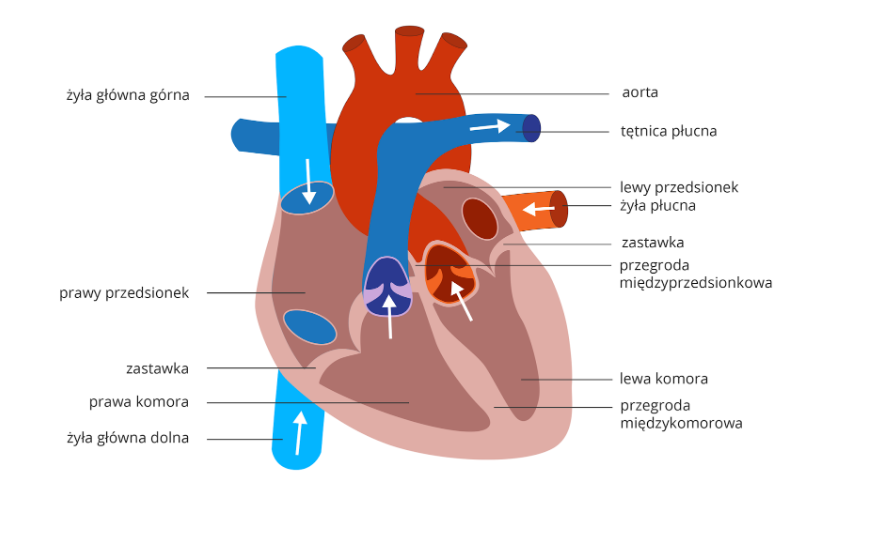
The circulatory system is a closed transport network composed of the heart and blood vessels. The key component is the heart, located in the mediastinum behind the sternum. It is built of striated cardiac muscle tissue, whose contractions drive blood flow through the vascular system. The heart consists of two atria and two ventricles—the right and the left ventricle.
Because the atria pump blood only into the ventricles, their walls are thinner than those of the ventricles, which propel blood into the arterial circulation. To ensure delivery of blood even to the most distant cells, blood pressure must be sufficiently high. Veins enter the atria and carry blood to the heart, while arteries exit the ventricles and carry blood away from the heart. Valves located between the atria and ventricles and at the outlets of the great vessels open in only one direction, enforcing unidirectional blood flow and preventing backflow.
CARDIAC FUNCTION
The heartbeat is a continuous process; interruption of blood supply to any organ leads to irreversible, potentially life-threatening changes and tissue necrosis. Venous blood first enters both atria; atrial contraction then pushes blood into the ventricles. Ventricular contraction ejects blood from the heart into the arteries. After this phase, the heart enters a brief resting period, and during relaxation the atria refill with blood.
BLOOD VESSEL STRUCTURE
Blood is distributed throughout the body by blood vessels—specifically arteries, veins, and capillaries. The outer layer of vessels provides protection, the middle layer consists of smooth muscle tissue that enables vasoconstriction and vasodilation and thereby regulates blood flow, and the inner layer is thin and smooth to facilitate unobstructed blood passage.
Blood flows through arteries under high pressure, therefore their muscular layer and inner lining are relatively thick. In contrast, venous smooth muscle is thinner due to lower pressure. The inner lining forms valves that prevent backflow and support venous return against gravity. Between arteries and veins, very thin capillaries form dense networks. Capillary walls consist of a single layer of cells (simple squamous epithelium), enabling gas exchange and the transfer of various substances into and out of the microvasculature.
BLOOD CIRCULATION
Blood flow is enabled by a closed system comprising two circuits: the pulmonary (small) and systemic (large) circulation. In the pulmonary circulation, blood rich in carbon dioxide and low in oxygen is pumped from the right ventricle into the pulmonary arteries. These branch into smaller arterioles and ultimately into capillaries surrounding the alveoli. Gas exchange occurs between capillary blood and alveoli: carbon dioxide diffuses out of the blood and oxygen diffuses into it. Oxygenated blood returns via venules that merge into larger veins and reaches the left atrium through the pulmonary veins.
Atrial contraction drives blood into the left ventricle, initiating systemic circulation. Blood is ejected from the left ventricle into the aorta, which branches into smaller arteries that, near tissues, form capillary networks. Through these capillaries, oxygen and nutrients are delivered to cells and metabolic waste products are removed. Internal gas exchange then occurs: oxygen diffuses into tissues, while carbon dioxide diffuses into the capillaries. Deoxygenated blood is collected into venous capillaries that merge into larger veins. The superior and inferior vena cava return carbon dioxide–rich blood to the right atrium.
Most common cardiovascular diseases
- Ischaemic heart disease (acute coronary syndromes), heart failure, cardiomyopathies, congenital myocardial defects, valvular disease, arrhythmias and conduction disorders
Symptoms: The most common symptom of coronary disease is chest pain accompanied by pressure and tightness. The pain is usually retrosternal and occurs during excessive stress or physical exertion. Shortness of breath and nausea may also occur. - Chronic venous insufficiency, varicose veins, venous thromboembolism
Symptoms: visibly dilated superficial veins resembling dark cords or bundles with palpable bulges; swelling of legs and feet; dull or burning pain especially after prolonged standing; heaviness; itching; tingling; muscle cramps. - Arterial hypertension
Symptoms: headaches, insomnia, palpitations, tinnitus, visual disturbances (spots), and dizziness. - Heart failure
Symptoms: oedema related to fluid retention, dyspnoea, and fatigue. - Myocardial infarction
Symptoms: severe retrosternal pain, sudden exertional dyspnoea, severe abdominal pain with vomiting or nausea, marked dizziness, syncope or loss of consciousness, palpitations, weakness. - Cardiac arrhythmia
Symptoms: sensation of the heart beating too slowly or too fast, dyspnoea, breathing difficulty, choking sensation, angina-like pain, presyncope, loss of consciousness, dizziness, anxiety, restlessness, memory disturbances. - Stroke
Symptoms: limb weakness (leg or arm) and asymmetry of the lower face around the mouth. - Rheumatic heart disease
Symptoms: dyspnoea and chest pain, particularly retrosternal; pain may radiate to the back, neck, or left shoulder; symptoms worsen with coughing and lying down; tachycardia, palpitations, ankle and lower-leg oedema may occur. - Raynaud’s syndrome
Symptoms: pallor of fingers and toes (sometimes the nose or auricles). - Cardiopulmonary syndrome
Symptoms: palpitations, dyspnoea, fainting, cold hands and feet, and cyanosis that may involve the earlobes, lips, and nose.
Beneficial effects of GHK-Cu on cardiotoxicity
Cardiotoxicity may manifest, among other effects, as cardiac rhythm disturbances, impairing the efficiency of cardiac function. NL-GHK-Cu peptide activity may reduce the risk of these complaints and associated symptoms such as dizziness, weakness, fatigability, dyspnoea, and syncope. According to research, cardiotoxicity-related effects in the context of NL-GHK-Cu use significantly influence parameters such as stroke volume, ejection fraction, and fractional shortening. Studies have also described recombinant tripeptide expression, purification, and chemical characterisation, which for the first time revealed a strong protective potential of NL-GHK-Cu against cardiotoxicity.
Beneficial effects of GHK-Cu on fibrinogen suppression
Regardless of the cause of increased plasma fibrinogen concentration, it should be noted that it consistently remains a negative predictor of thromboembolic disease. NL-GHK-Cu may substantially influence microcirculatory blood flow, in which blood behaves as a thixotropic fluid. The peptide contributes to regulation of fibrinogen levels, and recent studies indicate that fibrinogen is a major risk factor for cardiovascular diseases. Additionally, NL-GHK-Cu inhibits the production of interleukin-6, a principal regulator of fibrinogen synthesis. Gene-profile data further suggest that NL-GHK-Cu reduces the frequency of expression of the fibrinogen beta-chain gene.
References
- Pickart L, Margolina A. Regenerative and Protective Actions of the GHK-Cu. 2018;19. doi:10.3390/ijms19071987.
- Kubica A, Grześk G, Grąbczewska Z. Choroby układu sercowo-naczyniowego—wyzwanie dla promocji zdrowia. 2006;11(2):44–47.


NL-GHK-Cu in pain management and inflammation reduction
Peptide therapy with NL-GHK-Cu in eliminating hair loss and weakening