 English


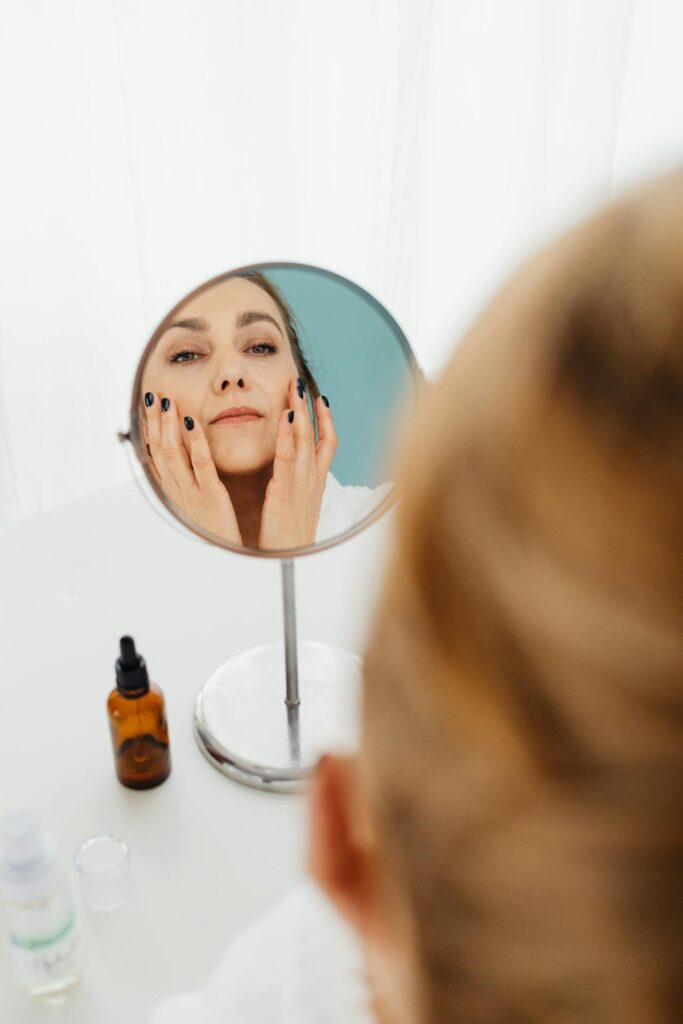
Peptides are among the most effective active ingredients in skin care and anti-aging supplementation. Thanks to their ability to stimulate collagen synthesis and tissue regeneration, they form the foundation of modern skin care. In this article, we explain how specific peptides available in the SYNTHAGEN range work and why it is worth including them in an individual strategy to support skin firmness and a youthful appearance.
What are peptides and why do they affect the skin?
Peptides are short chains of amino acids with strong biological activity. Their structure allows them to easily penetrate the skin barrier, enabling them to act directly in the deeper layers of the skin. Many peptides act as regenerative signals – they activate repair mechanisms such as:
- collagen production,
- elastin
- hyaluronic acid.

In the body, the amount of collagen decreases with age, leading to loss of firmness and the appearance of wrinkles. Peptides can activate fibroblasts, which are responsible for its production. Moreover, some have antioxidant or nerve-protecting effects, which support the overall condition of the skin and tissues.
These properties make peptides a key element of anti-aging treatments – both as supplements and topical preparations.
Which peptides best support collagen production?
Not all peptides work the same – some stand out for their particularly strong effect on collagen synthesis.
Main peptides supporting collagen:
- NL-GHK-CU – a copper peptide with powerful regenerative effects
- NL-EPITHALON – supports cell renewal and slows aging
- NL-BPC-157 – a strong stimulator of tissue healing and collagen rebuilding
NL-GHK-CU
Known for its exceptional ability to stimulate the production of type I and III collagen. At the same time, it reduces inflammation and supports wound healing, making it valuable support for mature and demanding skin.
NL-EPITHALON
Acts at the level of telomeres, slowing aging processes and supporting fibroblast efficiency. As a result, the skin becomes more resilient and resistant to damage.
NL-BPC-157
Known mainly for its use in tissue regeneration, it also has a documented effect on rebuilding collagen and capillaries, which translates into a healthier complexion and skin elasticity.
How do peptides improve skin firmness and structure?
Peptides affect firmness by supporting the intercellular matrix. This action mainly involves activating fibroblasts, which produce not only collagen but also elastin and proteoglycans – key components responsible for skin elasticity. Peptides also increase skin hydration and reduce microinflammation, which accelerates aging.
Did you know?
Clinical studies have shown that regular use of peptides can reduce the visibility of wrinkles by up to 30% within a few weeks. The best results are achieved with systematic supplementation and the use of topical preparations. Combined with a proper diet and UV protection, peptides can significantly delay visible signs of aging, improving facial contours and skin tension.
What other peptides are worth knowing about and how do they work?
Besides peptides strictly related to collagen, there are also those supporting regeneration and nerve-protecting functions.
Additional peptides with supportive effects:
- NL-SELANK – anti-anxiety effect and stabilizes nervous system functions
- NL-SEMAX – supports cognitive functions and increases resistance to oxidative stress
- NL-CORTAGEN – regenerates the nervous system and improves cellular efficiency
Although these peptides do not act directly on collagen, their influence on the body indirectly affects the skin’s condition – by reducing oxidative stress, improving sleep quality, or increasing cellular vitality.



Peptides in the treatment of long-lasting ailments
Are peptides the future of medicine? Discover the potential of a new age of treatment