 English

NL-GHK-Cu peptide therapy allows for the restoration, maintenance, and protection of a properly functioning nervous system. In addition, it is a therapy that significantly reduces the incidence of age-related diseases, more specifically neurodegenerative diseases.
Abstract: A properly functioning nervous system is essential for maintaining both physical and mental health, which is why it is so important to protect and regenerate it. The action of the NL-GHK-Cu peptide allows for the restoration, maintenance, and protection of a properly functioning nervous system. Studies show that it is a safe and biologically effective peptide, making it possible to prevent unwanted factors that can cause problems with the nervous system. Thanks to its action, there is also a significant improvement in the comfort of everyday life due to the reduction of stress and anxiety, among other things. Keywords: nervous system; structure of the nervous system; functions of the nervous system; diseases of the nervous system; NL-GHK-Cu; oxidative stress; brain inflammation; headache; dementia; inflammation of the nervous system; protection; anxiolytic effect; anti-stress effect; gene activation
Introduction
Currently, neurodegenerative diseases associated with aging, such as Alzheimer's and Parkinson's, which cause early physical decline, are considered to be the most common neurological problems. Despite all the advances in neuroscience in recent decades, age-related cognitive decline resulting from neurodegenerative processes in the brain remains a challenge for researchers and clinicians due to the highly complex nature of its pathogenesis. Currently, oxidative stress, disruption of transition metal homeostasis, and inflammation of the nervous system are considered to be the key processes leading to neurodegeneration. Stress, which accompanies the daily lives of a significant number of people, is also a significant problem. However, all nervous system disorders that significantly impair the quality of life in every aspect are an important problem, and above all, these disorders are dangerous in their effects. NL-GHK-Cu is a human copper-binding peptide with biological activity that has the ability to counteract brain aging, the development of brain diseases and inflammation, and nervous system disorders.
STRUCTURE OF THE NERVOUS SYSTEM
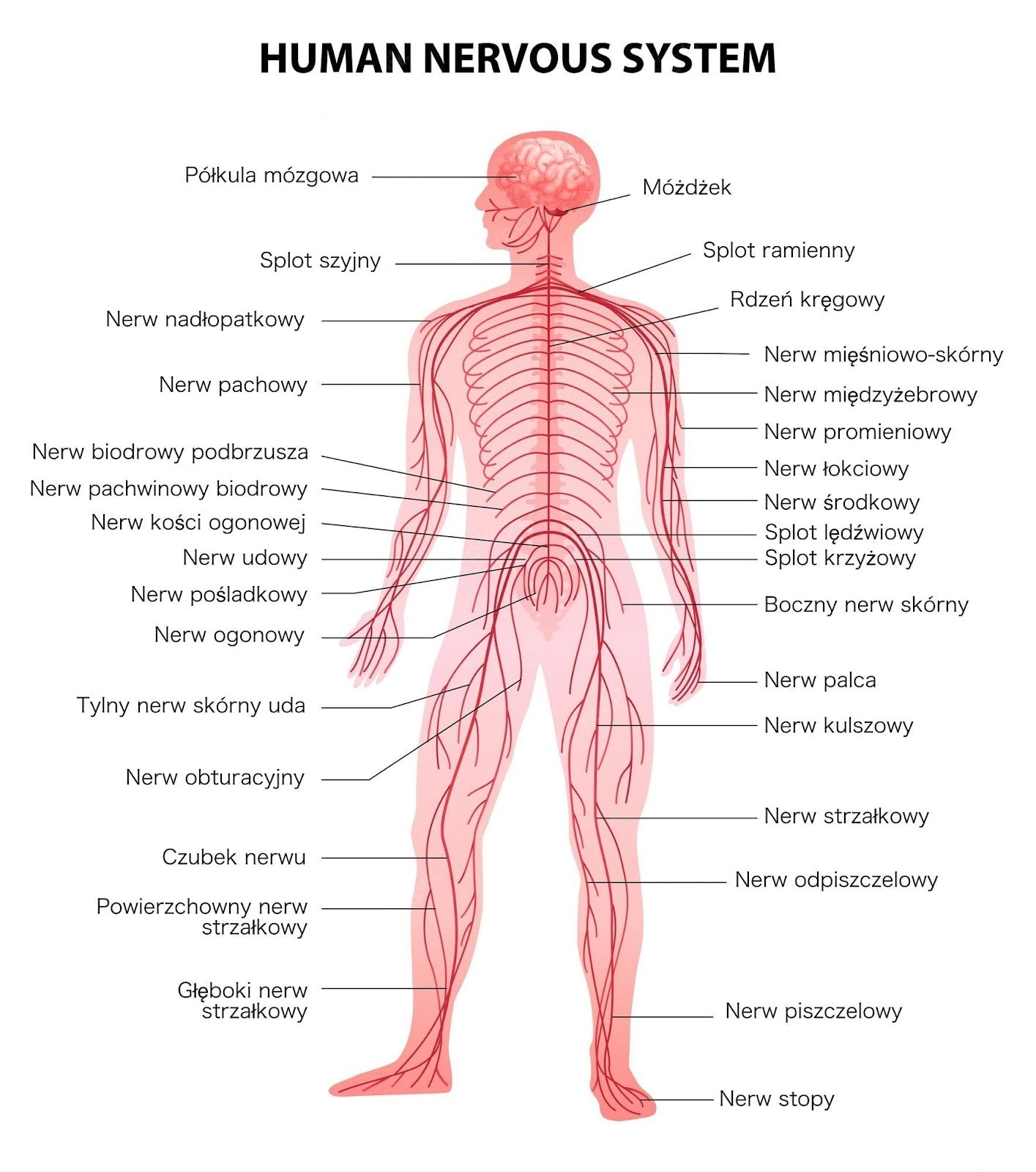
In short, the human nervous system is divided into the central nervous system, which consists of the brain and spinal cord, and the peripheral nervous system, which consists of 31 pairs of spinal nerves and 12 pairs of cranial nerves. It affects bodily functions such as movement, breathing, and blood circulation.

FUNCTIONS OF THE NERVOUS SYSTEM
The basic function of the nervous system is to transmit signals, or nerve impulses, between nerve cells. This is done through synapses, or connections, primarily between individual neurons, but also between nerve cells, for example, between muscle cells or cells belonging to the sensory organs. Impulses within nerve cells are transmitted thanks to the fact that these structures are electrically excitable. In this way, the signal travels within the nerve cell until it reaches the synapse, or more precisely, its element called the presynaptic terminal. Under the influence of numerous changes, molecules called neurotransmitters are released into the synaptic space. They reach the next element of the synapse, the postsynaptic terminal, and after binding to receptors, another electrical impulse is generated.
THE MOST COMMON DISEASES OF THE NERVOUS SYSTEM
Currently, oxidative stress, disruption of transition metal homeostasis, and inflammation of the nervous system are considered to be the key processes leading to neurodegeneration, but there are many more disorders and diseases of the nervous system. In addition to traditional methods, GHK-Cu peptide therapy is also helpful for the disorders listed in the table.
| Ailments | Treatment/Therapies |
| Headaches: migraine tension headache cluster headache |
|
| Extrapyramidal disorders: Parkinson's disease, restless legs syndrome |
|
| Infectious diseases: meningitis, encephalitis |
|
| Dementia: mild cognitive impairment, frontotemporal dementia |
|
NL-GHK-CU IN THE NERVOUS SYSTEM
The NL-GHK-Cu profile is based on its antioxidant, anti-inflammatory, and protective properties as a compound capable of restoring balance and proper functioning of the nervous system and cognitive functions, and preventing many common neurodegenerative diseases.
OXIDATIVE STRESS
Oxidative stress occurs when the balance between harmful free radicals and antioxidants, whose task is to neutralize the former, is disturbed in the body. This condition can lead to many diseases and faster aging of the body. Until now, many antioxidant compounds have been considered promising in the prevention of neurodegenerative disorders, including vitamin E, melatonin, green tea polyphenols, and resveratrol. However, research on these compounds has yielded mixed results, and many promising methods, such as vitamin E therapy, do not slow the progression of age-related neurodegenerative diseases, which is why a therapy that inhibits the oxidative stress process is desirable.
NL-GHK-CU IN THE INHIBITION OF OXIDATIVE STRESS
Due to the attachment of a copper molecule, the NL-GHK-Cu peptide helps maintain normal copper levels in the body, preventing reduced SOD activity and increased oxidative damage to the brain. The protective processes against oxidative stress, thanks to the action of the NL-GHK-Cu peptide, occur because the high metabolic activity of the brain causes increased oxygen consumption and constant production of reactive oxygen species (ROS) in the mitochondria. At the same time, brain tissue is rich in unsaturated fatty acids and transition metal ions, but has relatively fewer antioxidants compared to other organs, which creates favorable conditions for oxidative damage. Since the blood-brain barrier prevents many dietary antioxidants from entering the brain, it relies heavily on endogenous antioxidants such as Cu and Zn-dependent superoxide dismutase (Cu, Zn SOD1). This enzyme requires metal ions, copper and zinc, for its activity. In addition, several studies have revealed the molecular mechanisms underlying the beneficial effects of copper in AD, such as the inhibition of beta-amyloid peptide production.
NL-GHK-CU IN INFLAMMATION OF THE NERVOUS SYSTEM
Inflammation of the nervous system is caused by the overproduction of pro-inflammatory cytokines and is considered to be the leading factor in the development of age-related neurodegenerative diseases or permanent damage to this system. The role of the NL-GHK-Cu peptide is to reduce the overproduction of cytokines, leading to the protection of the nervous system and the elimination of factors that may cause its formation.
NL-GHK-CU IN THE POST-SYNDROME DULLING COMPLEX
Steroid-induced dementia syndrome describes the signs and symptoms of hippocampal and prefrontal cortex dysfunction, such as memory, attention, and executive function impairment, caused by glucocorticoids. The dementia subsides, but not always completely, within a few months after discontinuing steroid treatment. The action of the NL-GHK-Cu peptide, administered systemically, allows for faster elimination of the harmful agent from the body and inhibition of its harmful effects, including dementia.
PROTECTIVE AND SAFEGUARDING EFFECT OF NL-GHK-CU IN THE NERVOUS SYSTEM
Among the compounds that have a protective effect and can reduce oxidative damage are certain neurotrophic factors, such as brain-derived neurotrophic factor (BDNF). NL-GHK-Cu increases the production of neurotrophic factors. The peptide additionally stimulates the growth of cultured nerves, and nerve stumps placed in a collagen tube impregnated with NL-GHK-Cu show increased production of nerve growth factor. Under the influence of the peptide, neurotrophins NT-3 and NT-4 increase cell migration to the collagen tube and accelerate nerve fiber regeneration . In addition, NL-GHK-Cu also increases the number of axons and Schwann cell proliferation.
NL-GHK-CU AND ANTI-ANXIETY EFFECT
According to experimental studies, the administration of the NL-GHK-Cu peptide reduced the duration of immobility associated with anxiety. The peptide reduces feelings of anxiety, restlessness, and mental tension, as well as the somatic symptoms that accompany these conditions.
NL-GHK-CU AND ANTI-STRESS ACTION
As mentioned above, GHK-Cu helps reduce anxiety. In addition, it is also used in neurotic disorders and accompanying stress, both in the form of long-term daily stress and in sporadic stressful situations. It is worth mentioning that stress, especially long-term stress, cannot be eliminated overnight and is usually a process that lasts from several weeks to even several months, which is why systematic and long-term supportive therapy with the NL-GHK-Cu peptide is so important.
ACTIVATION OF GENES RESPONSIBLE FOR INHIBITING FACTORS THAT DAMAGE THE NERVOUS SYSTEM, THROUGH NL-GHK-CU
NL-GHK-Cu activates numerous genes involved in the physiology, development, and maintenance of the nervous system. A connectivity map was created containing three NL-GHK-Cu gene expression profiles generated using the GeneChip HT human genome U133A array. The peptide's action profile is based on the activation of genes responsible for inhibiting factors that damage brain function, thereby promoting protective processes in the nervous system.
Bibliography
1.Pickart L, Vasquez-Soltero JM, Margolina A. The human tripeptide GHK-Cu in prevention of oxidative stress and degenerative conditions of aging: implications for cognitive health. Oxid Med Cell Longev. 2012;2012:324832. doi:10.1155/2012/324832
2.Pickart L, Margolina A. Regenerative and Protective Actions of the GHK-Cu Peptide in the Light of the New Gene Data. Int J Mol Sci. 2018;19(7):1987. Published 2018 Jul 7. doi:10.3390/ijms19071987
3.Bossak-Ahmad K, Wiśniewska MD, Bal W, Drew SC, Frączyk T. Ternary Cu(II) Complex with GHK Peptide and Cis-Urocanic Acid as a Potential Physiologically Functional Copper Chelate. Int J Mol Sci. 2020;21(17):6190. Published 2020 Aug 27. doi:10.3390/ijms21176190
4.Pickart L, Vasquez-Soltero JM, Margolina A. The Effect of the Human Peptide GHK on Gene Expression Relevant to Nervous System Function and Cognitive Decline. Brain Sci. 2017;7(2):20. Published 2017 Feb 15. doi:10.3390/brainsci7020020



NL-GHK-Cu in lung diseases
NL-Epithalon in the visual system