 English

NL-Epithalon peptide therapy enables the restoration, maintenance, and protection of a properly functioning nervous system. In addition, it is associated with a marked reduction in the occurrence of consequences resulting from stressful situations.
Abstract: Stress is a mechanism that accompanies humans in everyday life. Despite changes in living conditions, our physiological responses remain the same. Stress is a reaction intended to prepare us to cope with challenges that arise in the environment and in daily life. Studies on the activity of the NL-Epithalon peptide indicate effects that may contribute to reducing stress and limiting its development.
Keywords: NL-Epithalon; stress; phases of response; symptoms of stress; nSMase
Introduction
Stress—and inadequate coping with it—contributes to numerous somatic and psychiatric disorders. It is an inseparable companion of human life. Research indicates that stress plays a regulatory role in both health and disease. Stress and coping (effective and ineffective) constitute psychological mechanisms underpinning human health. The consequences of coping with stress include both positive and negative emotions. It is evident that the body, mind, and emotions are closely interconnected, and an increasing body of empirical evidence supports this relationship. The onset of disease, its course, and the potential for recovery depend to a considerable extent on an individual’s mental state. NL-Epithalon, as a peptide with broad applications, may contribute to mitigating stress and limiting its emergence.
Stress
The concept of stress is understood simultaneously as a response, a stimulus, or a transaction. Stress is defined as a complex bodily response to stimuli that disrupt homeostasis—i.e., the maintenance of equilibrium within the internal environment of the human organism in relation to external conditions. In this context, stress is conceptualized as a response to stressors. A stressor, via the nervous and endocrine systems, may trigger a generalized stress response involving the entire organism. Two types of stress responses are distinguished: positive and negative. The positive response, termed eustress, is considered “good” stress and is understood as a health-promoting physiological response to stressors. Distress, in contrast, exerts a negative, damaging effect and is difficult to control.
An example of a stimulus-based definition of stress is the life-change concept, in which a life change is defined as any event that increases adaptive activity due to an associated psychological and physical burden greater than usual. According to the life-events framework, the social environment plays a significant role in an individual’s experience of stress. Stress-inducing events may lead to reduced immunity and, ultimately, more serious consequences related to the development of diseases of various etiologies.
Phases of the Stress Response
- Alarm phase: The stage in which the response to a novel situation constitutes a new challenge. Physicochemical changes occur that prepare the organism to meet demands.
- Adaptation phase: During adaptation, the organism learns to cope with the challenge effectively and without excessive disruption. If the individual manages the difficult situation, physiological parameters return to baseline. If not, the final phase follows.
- Exhaustion phase: The final stage, characterized by persistent activation of the entire organism, leading to depletion of resources and, consequently, psychosomatic disorders.
Stress-Related Changes in the Human Organism
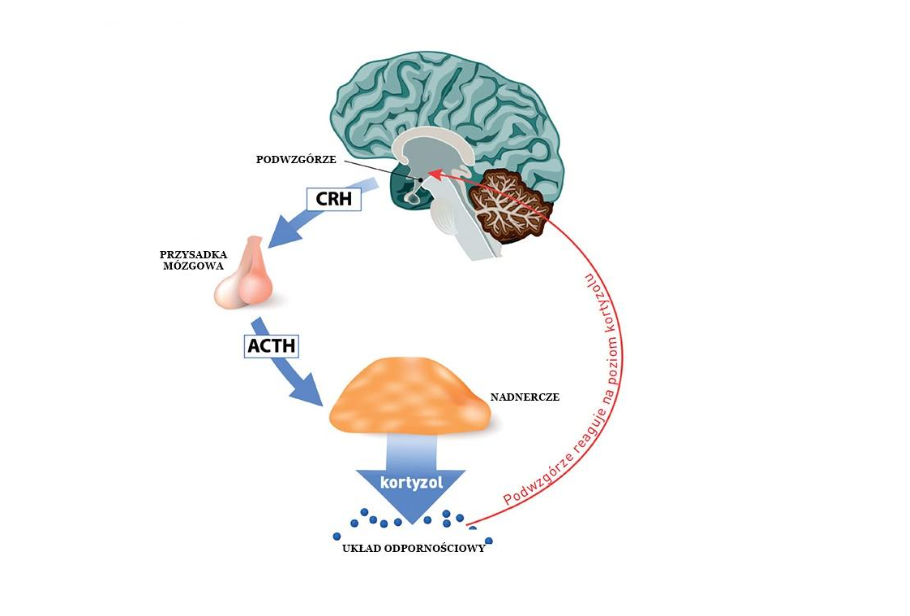
Chronic stress induces substantial changes in the human body. For example, the adrenal glands secrete so-called stress hormones. As a result, concentration and vigilance increase, and the body begins to prepare for heightened effort. Heart rate accelerates, breathing intensifies, blood is redirected to major muscle groups, and digestion is inhibited. The pituitary gland initiates the release of a group of hormones into the bloodstream that increase blood pressure and promote the release of glucose and lipids, thereby supplying muscles with substrates necessary for intensified work.
Severe stress suppresses not only the digestive system but also the reproductive and immune systems. The organism seeks to allocate as much energy as possible for “fight or flight,” prioritizing functions essential for survival. Muscle tension increases, pain tolerance rises, heart rate and respiration accelerate, and strength increases. Thinking and reactions become faster; individuals may feel aroused and ready for action, and movements become quicker. A state of pleasant arousal or irritability may progress to intense emotions such as fear, anger, and rage. Severe stress can also disrupt cognition and impair behavioral control.
Symptoms of Excessive Stress
- Arousal: accompanied by intense activity and excessively emotional reactions.
- Withdrawal: manifested by social isolation, reduced energy, emotional reactivity, and depressive states.
- Paralysis: a stress-related state characterized by perceived inability to act or even physical immobilization.
Cognitive symptoms
- Difficulties with memory and concentration
- Problems with accurate appraisal of situations
- “Tunnel thinking,” i.e., inability to perceive solutions
- Racing thoughts
Emotional symptoms
- Low mood
- Irritability
- General dissatisfaction
- Excessive arousal
- Anxiety
- Feeling overwhelmed
- Loneliness and isolation
- Depressive states
- Depression
Physical symptoms
- Pain in various parts of the body
- Excessive muscle tension
- Diarrhea or constipation
- Nausea
- Dizziness
- Reduced immunity
- Problems with sexual activity
Behavioral symptoms
- Sleep disturbances
- Morning fatigue
- Loss of appetite or overeating
- Avoidance of contact and/or aggression toward others
- Neglect of responsibilities
- Frequent use of psychoactive substances
- Nervous habits (e.g., nail biting, lip biting)
NL-Epithalon and Stress
The NL-Epithalon tetrapeptide exhibits the ability to enhance neuronal resistance to stress via stimulation of endogenous antioxidant enzyme systems and, potentially, by limiting the cytotoxic action of N-methyl-D-aspartate (NMDA). It prevents pathological alterations in the structure of the pineal parenchyma induced by osmotic stress. In addition, it appears that the physiological activity of NL-Epithalon is mediated by activation of proto-oncogenes in pinealocytes.
NL-Epithalon as a Supportive Factor in Stress Protection
Studies indicate that NL-Epithalon increases the proliferative activity of thymocytes, both when enhanced under rotational stress and when suppressed under combined stress. The peptide also potentiates the concomitant effect of IL-1β. These findings corresponded with the influence of NL-Epithalon on various stress-induced changes in nSMase activity in the P2 fraction of the cerebral cortex. nSMase activated by NL-Epithalon in cortical membranes increases the stimulatory effect of IL-1β on enzymatic activity. Collectively, these studies support that NL-Epithalon exerts a protective effect against stress at the level of IL-1β signal transmission via the sphingomyelin pathway in nervous tissue, as well as at the level of downstream thymocyte proliferative responses.
References
- Sibarov D, Kovalenko R, Malinin V, Khavinson V. Epitalon influences pineal secretion in stress-exposed rats in the daytime. 2002;23(5–6):452–454.
- Kozina L. Investigation of antihypoxic properties of short peptides. 2008;21(1):61–67.
- Khavinson V, Korneva E, Malinin V, Rybakina E, Ivanovich I, Shanin S. Effect of epitalon on interleukin-1β signal transduction and the reaction of thymocyte blast transformation under stress. 2002;23(5–6):411–416.



NL-GHK-Cu in the elimination of calluses and skin thickening
NL-GHK-Cu in the prevention of common diseases such as atherosclerosis, cataracts, diabetes, nephropathy, and Alzheimer's disease.