 English


Action restoring the proper condition of the skin, improving its firmness, elasticity, and hydration. Peptide therapy against skin abnormalities, including cellulite and wrinkles.
Abstract: The use of Epithalon for skin care has strong foundations in modern scientific research. When Epithalon enters the body, processes begin that enable the maintenance of healthy, resilient, and firm skin. Thanks to its action, the number of fibroblasts increases, which stimulate the production of more collagen. As a result, the skin will be firmer and more elastic, making it less prone to wrinkles, especially in sensitive areas such as the lips and eyes.
Keywords: epithalon; circadian rhythm; sleep; sleep quality; melatonin; balance; insomnia; sleep phases; metabolism; synthesis; release; sleep disorders; melatonin receptors; telomere shortening; stimulation
List of abbreviations: SCN- SPZ- NREM; ALA; ASP; GLU
Introduction
Studies conducted on the effectiveness of NL-Epithalon have shown that this peptide can activate skin fibroblasts, cells responsible for repairing and maintaining the extracellular matrix, which makes our skin firm, elastic, and strong. The skin's extracellular matrix is the place where collagen, elastin, and other critical skin proteins can be found.
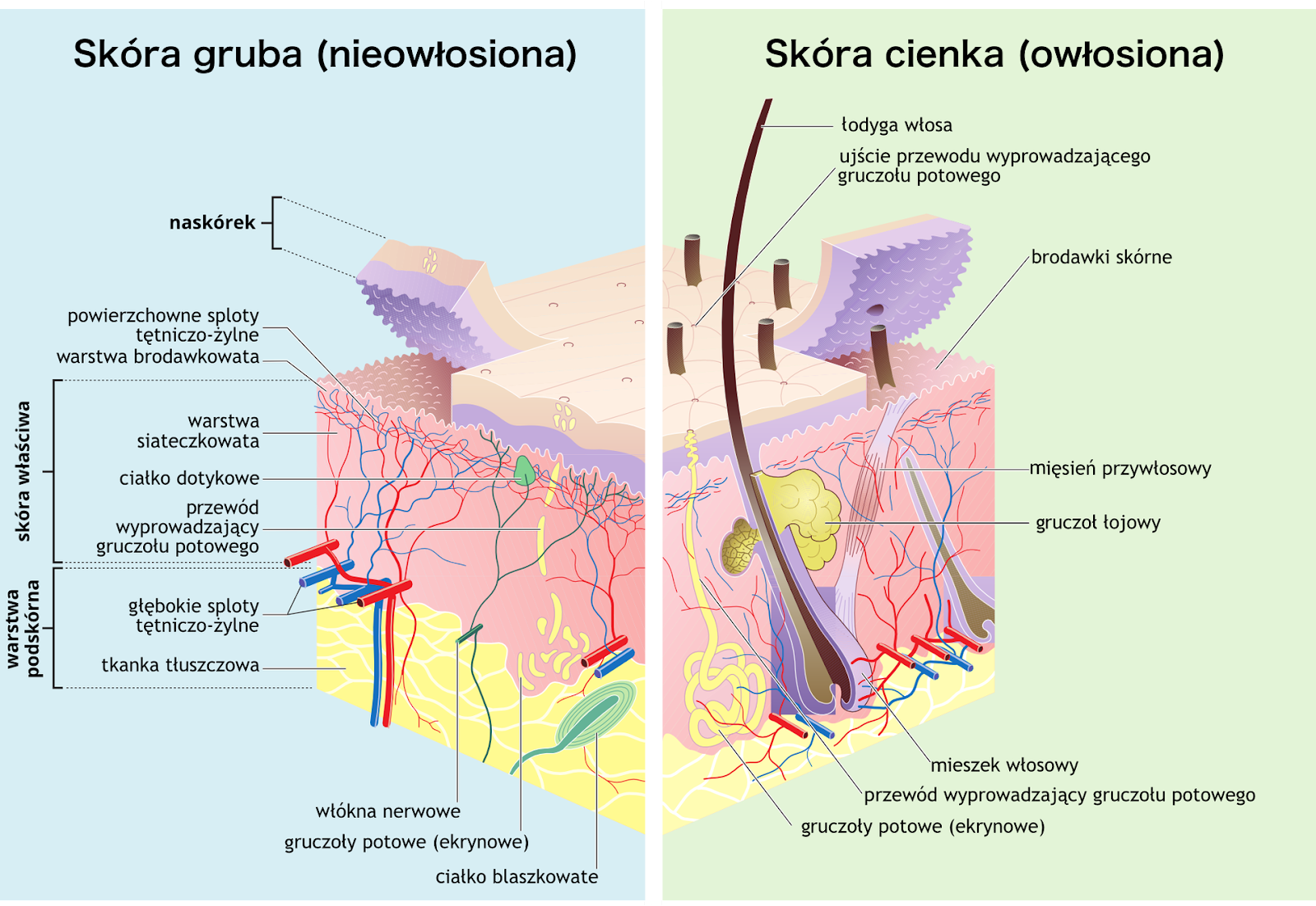
SKIN STRUCTURE
As is already known, our skin has a very complex structure and as a surface covering our body, it is considered one of the largest organs of our body. The condition of our skin often reflects the condition of our entire organism. The skin consists of two main layers: external and internal. The first, visible, hairy outer layer is the epidermis, which forms a barrier between the external environment and the internal environment of the body. The second, invisible, hairless layer called the dermis contains important nerve endings, hair follicles, as well as sweat and sebaceous glands. The subcutaneous layer, which is closely connected to the skin, is not considered a part of it. It mainly consists of fat tissue, and only a small percentage consists of connective tissue. In the structures of the subcutaneous tissue, there are nerve fibers and blood vessels. The main function of the subcutaneous layer is its role in the process of thermoregulation, which is of great importance for the entire organism.
SKIN FUNCTIONS
Human skin performs many physiological functions. Fulfilling an important physiological role, it protects internal organs from harmful environmental, physical, chemical, and microbiological factors. It also allows maintaining balance between the body and the environment. The most well-known functions of the skin include the mentioned protective function as well as the body's thermoregulatory function, participation in water and excretory balance, involvement in the synthesis of proteins and certain compounds, and participation in the metabolism of proteins, lipids, and carbohydrates. Additionally, it plays an important role in the body's immune response and in the conduction of sensory stimuli. Healthy skin is free from damage related to improper care or adverse environmental effects, tolerates changes in temperature and humidity well, and responds properly to most tested and appropriate skincare products.
DERMIS
The element on which we will focus our attention in this article will be cells found in the dermis such as fibroblasts, histiocytes, and fibrocytes. This layer also contains three types of fibers: reticular, elastic, and collagen fibers, which are responsible for the proper elasticity and tension of the skin. Weakening of these fibers is a direct cause of the loss of the desired skin appearance. With age, both the quantity and quality of these fibers decrease, the skin becomes thin and flabby, and wrinkles form on its surface. wrinkles. The level of collagen, elastin, and fibrin decreases not only with age (this process begins around the age of 30) but also due to factors related to an unhealthy lifestyle, including poor nutrition where the diet is deficient in essential vitamins, minerals, and fatty acids, as well as skin exposure to the sun, alcohol consumption, smoking, stress, lack of physical activity, or taking certain medications.
SKIN COLLAGEN FIBERS
Collagen is the main structural protein of the skin, constituting about 72% of its dry mass. It is produced by fibroblasts in dermis. It takes the form of a triple helix and consists of three chains containing about one hundred amino acids. Together with elastin, it gives the skin tension, elasticity, firmness, resilience, resistance to damage, and stretchability. The skin is primarily built of type I collagen, called the collagen of youth (about 80% of type I collagen and 20% of type III collagen are found in the dermis).
| Type of collagen in the skin | Occurrence |
| TYPE I COLLAGEN | the most common type of collagen in the body; present in tendons and bone connective tissue, in scar-forming tissue, in skin and subcutaneous tissue |
| TYPE III COLLAGEN | In tissue formed from fibroblasts during wound healing, fibers of proper reticular connective tissue are formed |
As mentioned above, with age and also with an inappropriate lifestyle, collagen fibers weaken. Additionally, newly produced fibers are of increasingly poorer quality, becoming shorter, more twisted, and weaker, and their degradation is influenced by external factors such as pollution and UV rays.
ELASTIC AND RETICULIN FIBERS
Between collagen fibers, reticulin fibers are scattered. They are found in greater amounts in the dermal papillae, and their chemical structure and origin are not yet fully studied. Elastic fibers intertwine with collagen fibers, giving the skin elasticity and stretchability. With the progression of skin aging processes (age or improper lifestyle), degeneration and clumping of elastic fibers with collagen fibers into an amorphous mass occur, as well as a decrease in collagen synthesis and impairment of angiogenesis (formation of new blood vessels). The consequence of these changes in connective tissue is the formation of wrinkles and furrows, reduced elasticity and firmness, and increased skin sensitivity.
CHARACTERISTICS OF NL-EPITHALON PEPTIDE PENETRATION IN A CAPSULE
Previous pThe problem related to the breakdown of the NL-Epithalon peptide in the body has been solved by changing its chemical form, where the basic form of the NL-Epithalon peptide, through modification, is transformed into a highly stable form. The basic form of NL-Epithalon during modification, by conjugation with additional amino acids, allows for increased peptide stability and overcoming the existing gastric barrier. Comparing the tablet form of the preparation with the topical preparation for skin application, it is worth noting that in the case of the oral drug, the active substance acts systemically, where it passes through the digestive tract, penetrates into the patient's blood, and is excreted through the kidneys. Using the peptide in a capsule leads to enhanced therapeutic effects, in a shorter period of time and with greater effectiveness. Additionally, in the case of severe ailments, the cosmetic preparation may be insufficient. Optimal and most beneficial effects can be observed when both preparations are used in combination.
NL-EPITHALON'S ABILITY TO PRODUCE COLLAGEN
Our body constantly maintains some collagen production, but it does not cover naturally occurring losses. However, the body can increase collagen production if it receives the appropriate signal. With the onset of aging, 2% of collagen in the skin is lost each year. When collagen fibers loosen and float through the body, they are too small to initiate sufficient production. However, if the amount of floating collagen suddenly increases, the body will increase production to replenish the reserves. NL-Epithalon, thanks to its properties stimulating the synthesis of type I and III collagen, smooths, tightens, and brightens the skin, which is visible in a short time of peptide use, providing the expected effect not only for mature individuals but also for those struggling with dehydrated, rough, tired, and dull skin.
PROPERTIES OF NL-EPITHALON THAT ELIMINATE WRINKLES, SKIN AGING, PROVIDING IMPROVEMENT IN FIRMNESS, ELASTICITY, AND RADIANCE FOR MATURE, TIRED, OR DEHYDRATED SKIN
Not only as the years go by, but also with an inappropriate lifestyle and skin needing hydration and color improvement, we accumulate skin problems such as wrinkles, which result from changes in the dermis. There is a decrease in collagen production there. At the same time, the ability of cell renewal gradually diminishes. Capillaries, which supply cells with important nutrients from the blood, become less efficient. To restore balance with reduced biological activity, our skin loses moisture-binding cells. This leads to skin dryness. NL-Epithalon, encapsulated, thanks to its cell-penetrating properties, stimulates the growth and development of fibroblasts, which secrete proteins such as collagen, ensuring multi-stage improvement in skin quality and regeneration at all possible levels. The skin's extracellular matrix is where collagen, elastin, and other critical skin proteins are found. Studies on the NL-Epithalon peptide have shown that by activating fibroblasts by up to half, repair and maintenance of the extracellular matrix occur, significantly improving skin condition and acting preventively against the formation of new skin changes.
NL-EPITHALON PROPERTIES THAT ELIMINATE CELLULITE
Most women over the age of 25 have a skin imperfection known as cellulite. Estimated studies show that this affects about 90% of women, including, mistakenly, those who practice sports and lead a healthy lifestyle. Cellulite is caused by hormonal imbalances in the body, which consequently cause uneven distribution of fat tissue. Cellulite most often occurs in the buttocks, abdomen, hips, and forearms, areas that store the most fat. Cellulite can therefore be divided into main types:
- Water cellulite mainly affects slim individuals and is caused by disturbed blood and lymph circulation in the tissues;
- Fatty cellulite mainly affects overweight individuals, with changes occurring in the deeper layers of the skin and connective tissue. Visible dimples and lumps appear on the skin.
Cellulite elimination should begin with lifestyle changes, appropriate exercises, supportive cosmetics, treatments, and importantly, proper supplementation. The conducted experience shows that NL-Epithalon, which does not cause side effects or unwanted allergic reactions, supports collagen synthesis, reduces cellulite, moisturizes the skin, firms it, and increases skin tension.
| EXPERIENCE 1: NL-EPITHALON PROPERTIES THAT ELIMINATE CELLULITE Material and method: 105 women aged 24-50 with moderate cellulite were randomly assigned to receive an oral dose of NL-Epithalon for 6 months. The degree of cellulite was assessed before treatment and after 3 and 6 months of peptide intake. Skin waviness and density as well as the length of the subcutaneous boundary were also evaluated. Results: Treatment with the NL-Epithalon peptide led to a statistically significant reduction in the degree of cellulite and decreased skin waviness on the thighs (P < 0.05) in women with normal weight. The subcutaneous boundary showed a significant shortening after taking NL-Epithalon compared to the start of the study, indicating the elimination of cellulite. The study results showed that regular intake of NL-Epithalon for 6 months led to a noticeable improvement in skin appearance and elimination of cellulite. |
 EPITHALON PROPERTIES ELIMINATING DIABETIC ULCERS
Studies have shown that preventing skin aging is more than just improving appearance. Aging skin is fragile, prone to tears, and often exposed to chronic injuries that lead to pressure sores, diabetic ulcers, and other damages. The ability to rejuvenate the skin will not only improve appearance; in fact, it will prevent damage, diseases, infections, and more. An additional and important spectrum of NL-Epithalon's action is its ability to heal wounds that arise as a result of diabetic disease. Skin ulcers and burning are caused precisely by diabetes. Study results indicate that wound healing in the case of diabetic foot ulcers is a complex and extremely demanding biological and molecular process involving the coordinated actions of many cell types. Solutions to the problem concerning the prevention of such skin lesions and their elimination have been sought unsuccessfully. Research on the NL-Epithalon peptide clearly indicates that it has properties allowing for the prevention and repair of skin after changes already caused by the disease. The spectrum of NL-Epithalon's action is based on its positive influence during three stages in the wound healing process, including the induction of macrophage recruitment to the wound site at the inflammatory response stage, promoting migration and proliferation of both keratinocytes and fibroblasts, leading to re-epithelialization and granulation tissue formation, and the tissue remodeling phase through promoting the release of transforming growth factor TGF-β1 and interleukin 6 (IL-6) and activation of mitogen-activated protein kinase (MAPK) signaling pathways.
Bibliography:
1.Linkova.N, Kuznik.B, Khavinson.V, Peptide Ala-Glu-Asp-Gly and interferon gamma: their role in immune response during aging. 2012; 478482
2.Khavinson.V, Short cell-penetrating peptides: a model of interactions with gene promoter sites.2013; 154: 403–410
3.Chalisova.N, Short peptides stimulate skin cell regeneration during ageing. 2014; 27:699–703
4.Khavinson.V, Peptides and Ageing. 2019; PMID: 12374906
5.Christensen,K, Thinggaard,M. Rexbye.M, Perceived age as a clinically useful biomarker of aging: cohort study. 2019; 122: 339:5262


The role of Epithalon in restoring the proper circadian rhythm and improving sleep quality
The anti-aging role of NL-Epithalon as a peptide ensuring longevity